

This route takes place in the Ombria area, starting at the municipal sports centre, and continues along the streets D. Juan de Austria, Plaza República de Malta, Corts Valencianes until the bridge that crosses the river Vaca.
We continue to the left and cross the bridge, arriving at a fork of three paths, we follow the one in the centre, towards the Pont del Riu. After about 200 metres, cross the Badell over another bridge, and continue along the path until you reach the crossroads with the Ombria path.
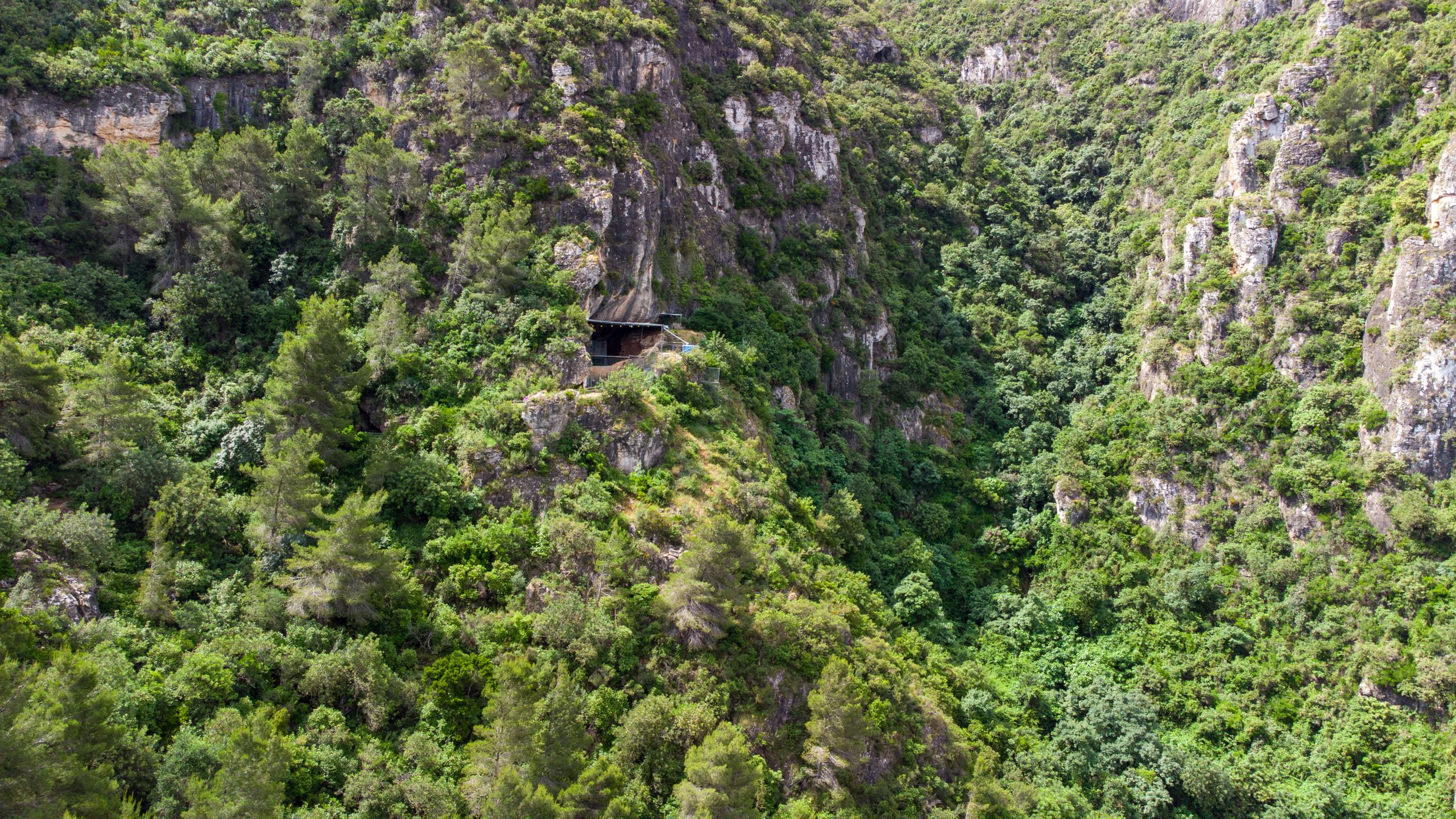
At this crossroads, turn left onto the Ombria path and follow the path eastwards until you come to a path on your right that is signposted and indicates the Bolomor cave. This is a dirt track and will take us to the foot of the Bolomor ravine, passing a small hut on our right.
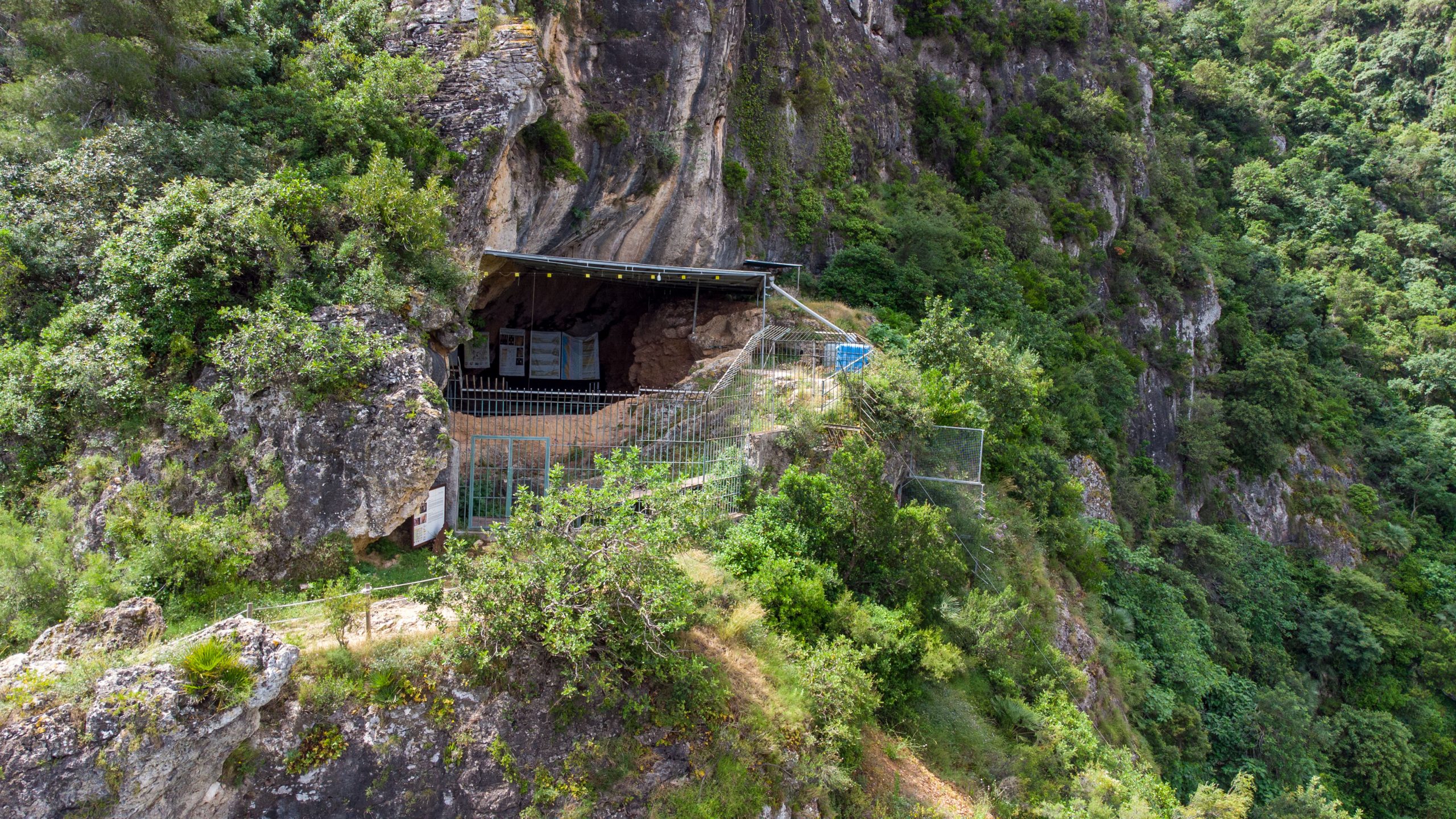
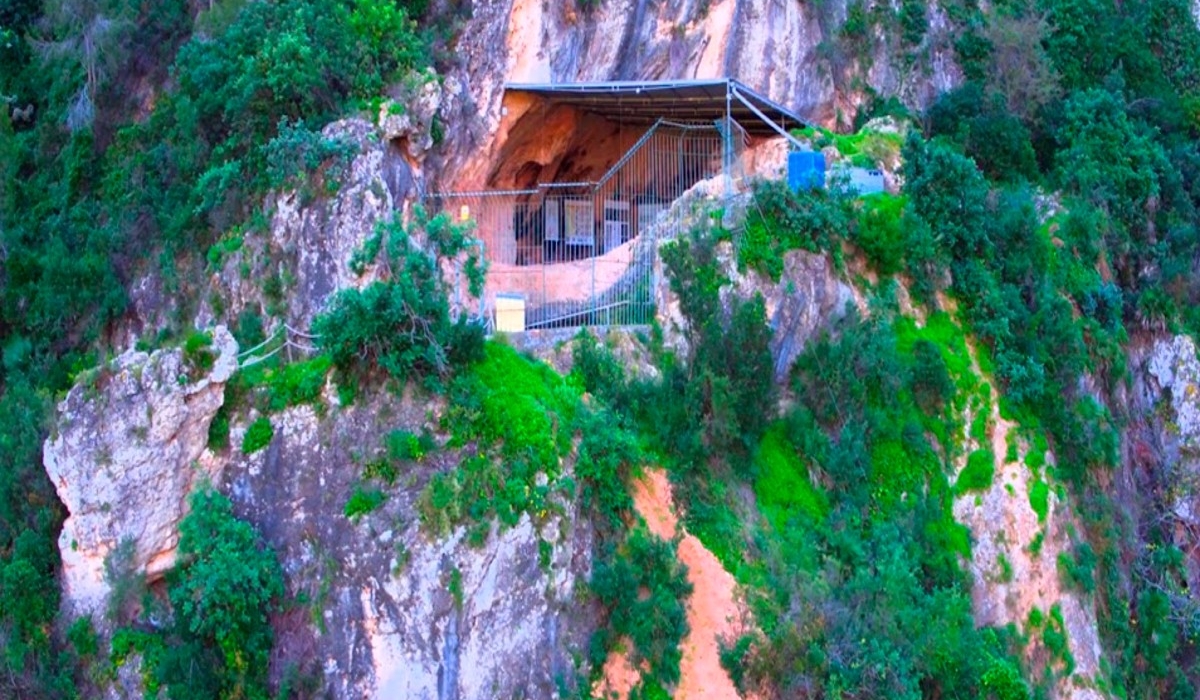
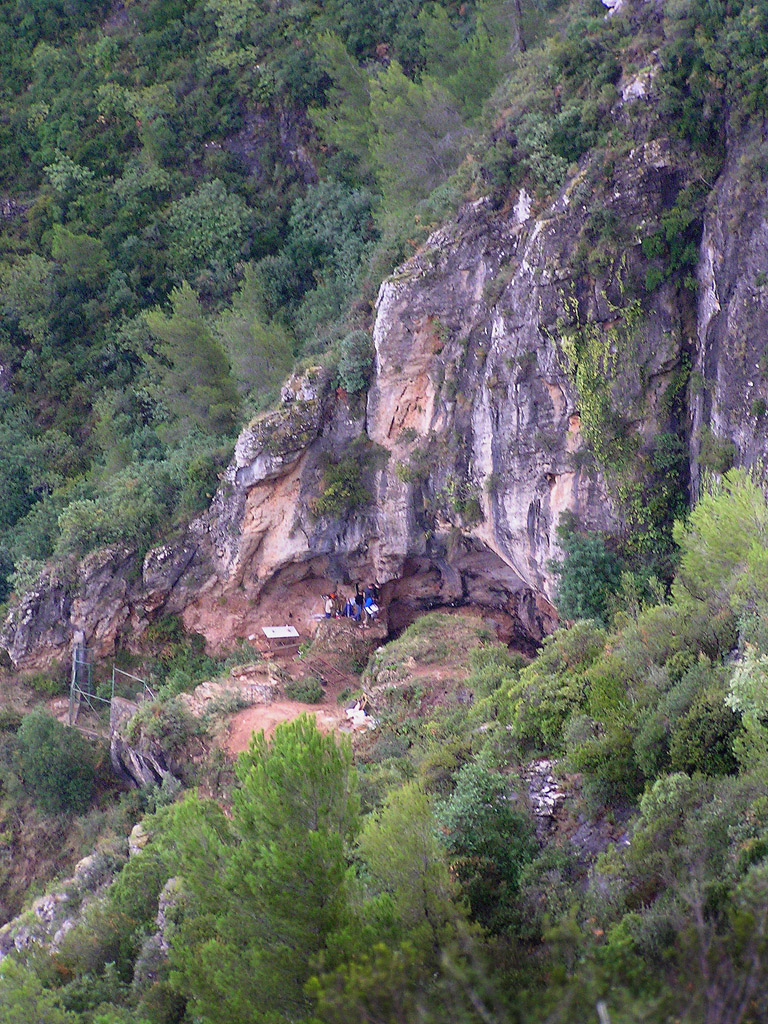
From this point we continue along a path that climbs upwards until we reach the Bolomor cave.
The route back to the sports centre or starting point is along the same path we took to reach the Bolomor.
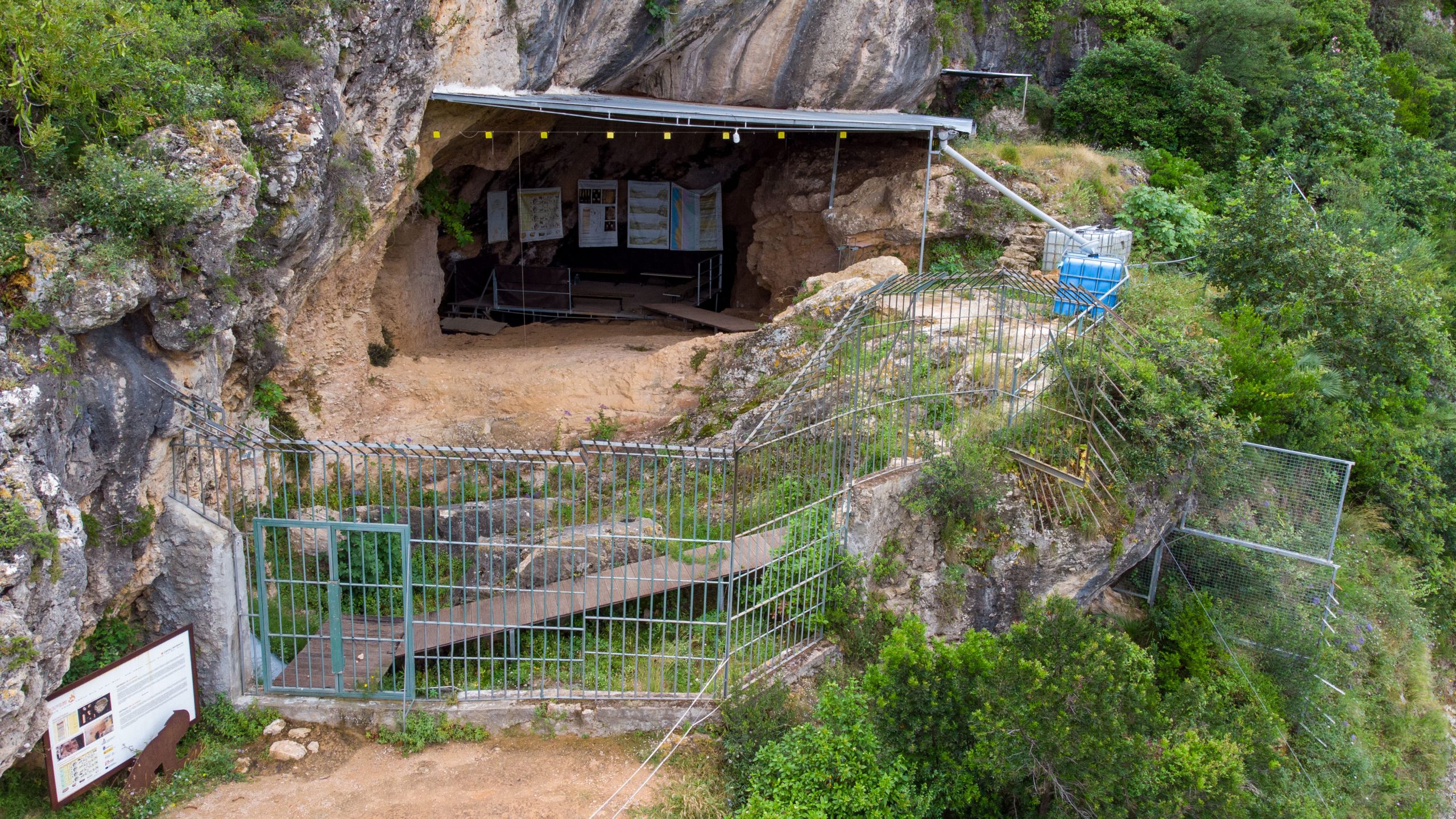
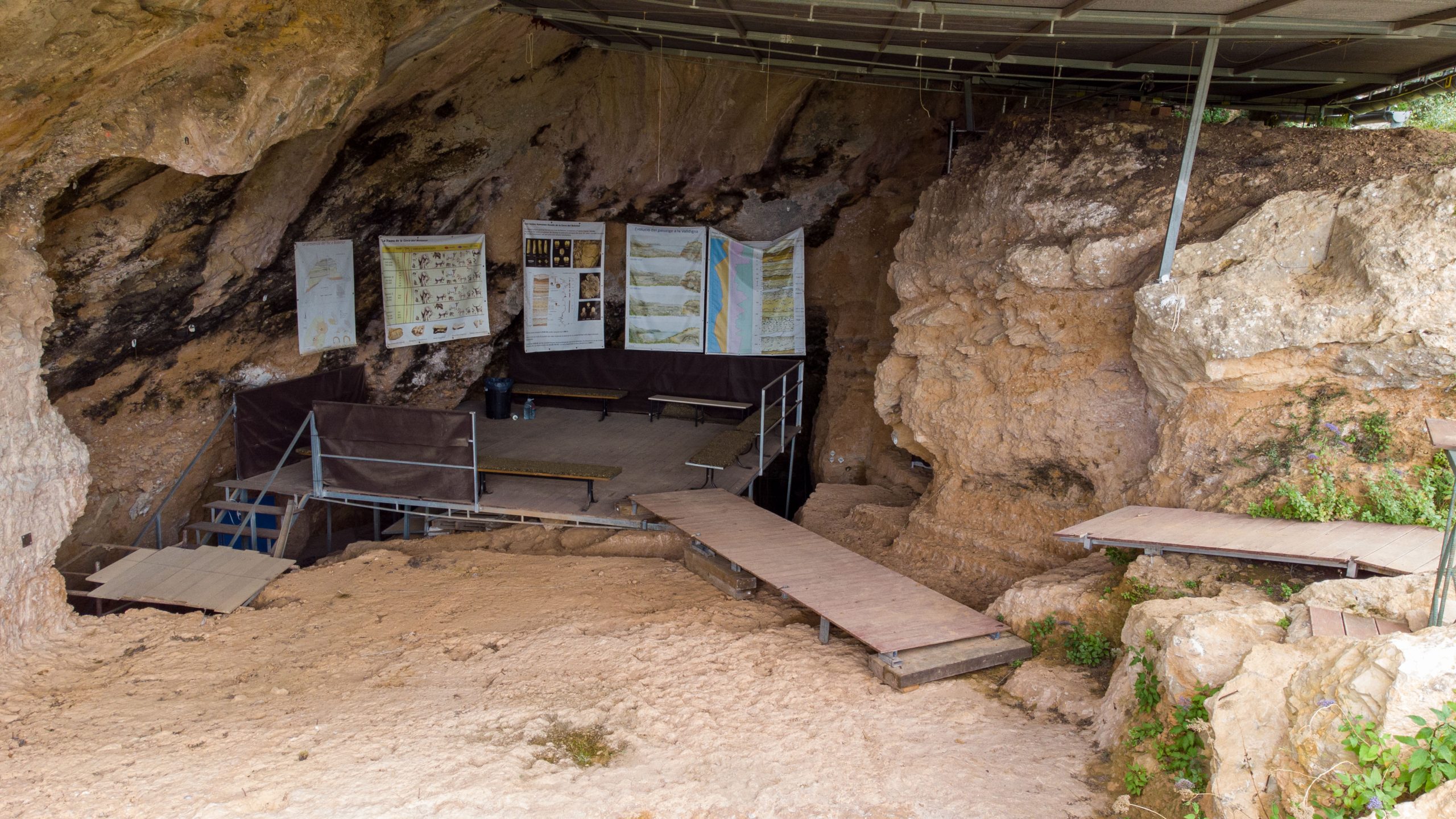
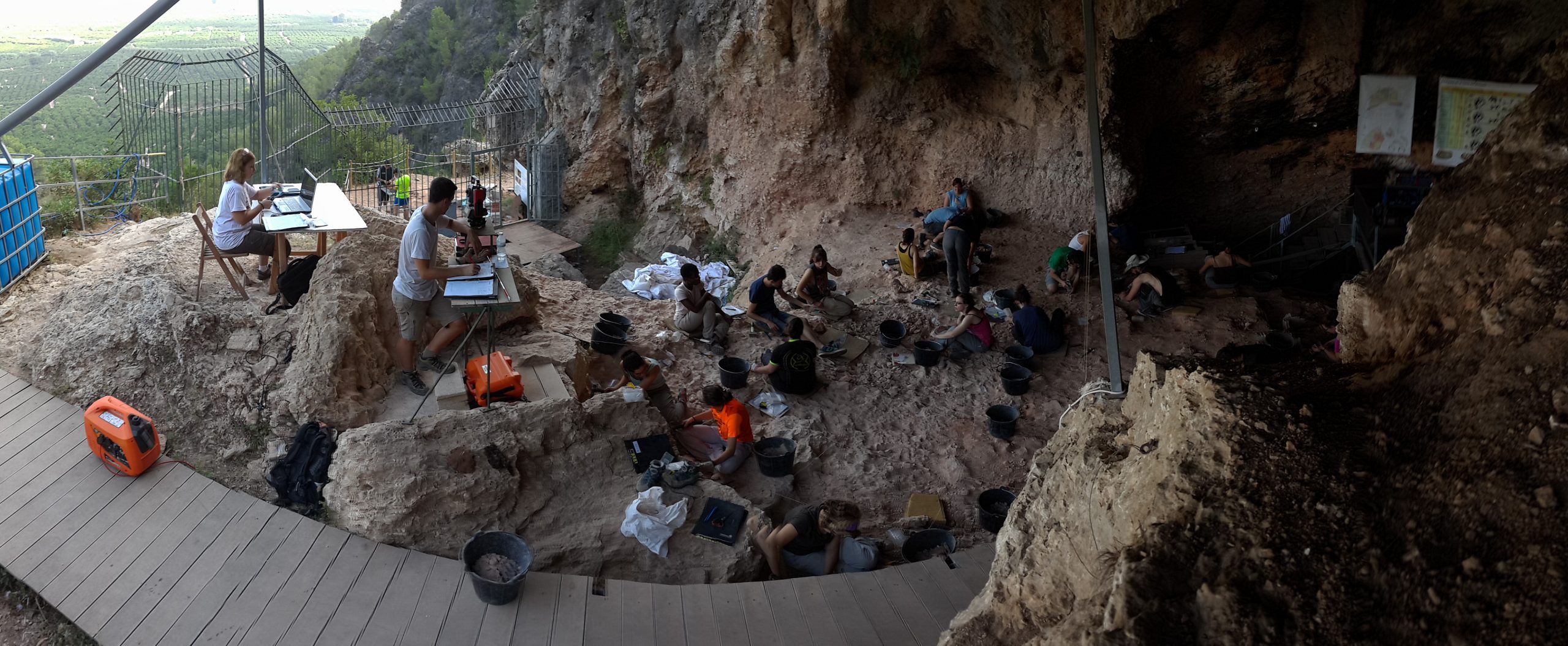
The Bolomor cave is an archaeological site located 2 km southeast of the town of Tavernes de la Valldigna, in the Valencian Community. The excavation and investigation of the site has been carried out since 1989 as part of the archaeological excavation programme of the Prehistoric Research Service of the Prehistoric Museum of the Diputación de Valencia. The archaeological work has the corresponding authorisation from the Directorate General for Heritage of the Generalitat Valenciana.
The excavation of the cavity has yielded abundant prehistoric materials, lithic remains, bones, combustion structures, as well as hominid fossils. The site is particularly important for its extensive chronostratigraphy, which spans from the Middle Pleistocene to the beginning of the Upper Pleistocene, between 100,000 and 350,000 years before the present. The most relevant findings concern the remains associated with the oldest known human settlement in the Valencian lands, which correspond to the ancient Palaeolithic.
The research has documented an exceptional and unique prehistoric record of the use of hearths over 250,000 years, evidence of controlled fire that is among the oldest in Europe.
The lifestyles of these ancient hominids, an important part of them, have been discovered for the first time here with the incorporation of novel behaviours in the use of food resources and their acquisition patterns.
The Bolomor cave represents an important place on the shores of the Mediterranean to discover the origins and characteristics of the European Palaeolithic settlement, the ways of life of the Neanderthals and other hominids that preceded them.
Throughout the year there are numerous guided tours and educational workshops organised by the Town Council of Tavernes de la Valldigna in collaboration with the Provincial Council of Valencia and the Bolomor cultural association.