

Guaita Tower in Tavernes de la Valldigna
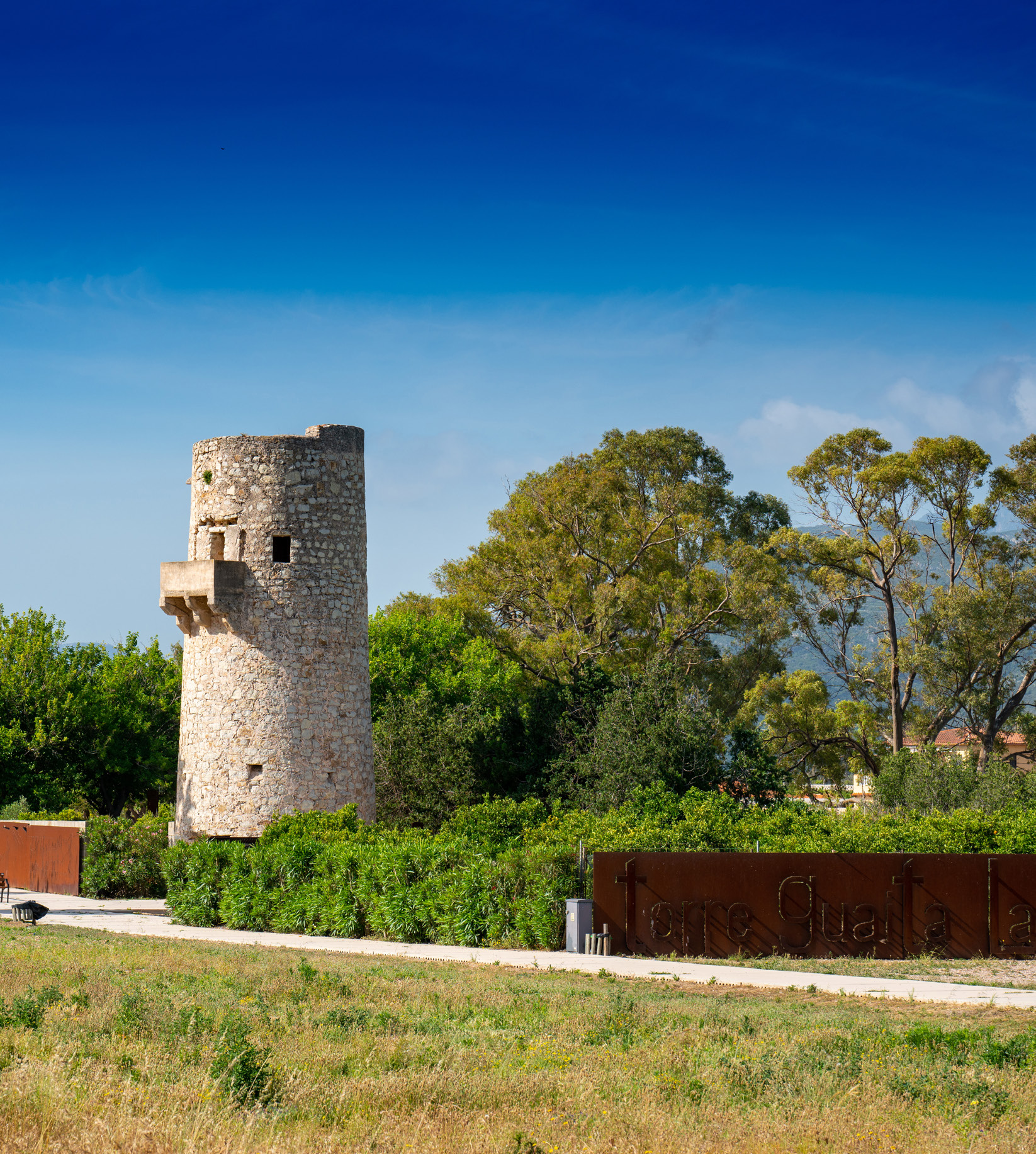
The Guaita Tower in Tavernes de la Valldigna, also known as the La Vall Tower, is one of the most recognizable heritage silhouettes on the city’s coastline. It stands in the Partida Marenys area, near Tavernes beach, in a natural leisure setting where history, walking routes and landscape come together.
Its origin is linked to the coastal watchtower system promoted in the 16th century to warn against corsair and pirate attacks. Bonfires were used at night and smoke signals during the day, creating a fast warning network for the local population and for other towers along the coast.
 Guaita Tower
What to know before visiting
The Guaita Tower is defensive heritage, but it is also a way to read the coastal landscape: it connects the beach, former watch routes, the agricultural memory of Marenys and today’s walks close to the Mediterranean.
 Information panel
A tower built to watch the coast
In the 16th century, the Valencian coast lived under the threat of attacks by Turkish and Barbary corsairs. The response was to create a network of towers that could watch the shoreline, give rapid warning and help protect the population.
The Guaita Tower of Tavernes formed part of that defensive system. Its position, close to the beach and slightly raised above the surrounding area, made it possible to observe the coastline to the north and south and to connect visually with other watchpoints.
The Spanish expression “Moors on the coast” is easier to understand in front of a tower like this: the warning had to be immediate because attacks were usually fast and unexpected.
A slender, unmistakable structure
The tower stands out for its truncated cone shape and for the good condition of its stone structure. It has often been described as one of the tallest and most slender towers of the former Kingdom of Valencia, with a vertical presence that sets it apart from many other coastal defensive buildings.
Its plan is circular, with a base around 6 metres in diameter and an approximate height of 15 metres. The interior is arranged over a ground floor, two upper floors and a top terrace. The ground floor has only one lintelled doorway, a feature that helped control access.
- Circular plan and truncated cone-shaped elevation.
- Stone walls, ashlar blocks and mortar.
- Lintelled doorway on the ground floor.
- Upper terrace with remains of deteriorated battlements.
- Defensive elements such as windows, loopholes and projecting wall features.
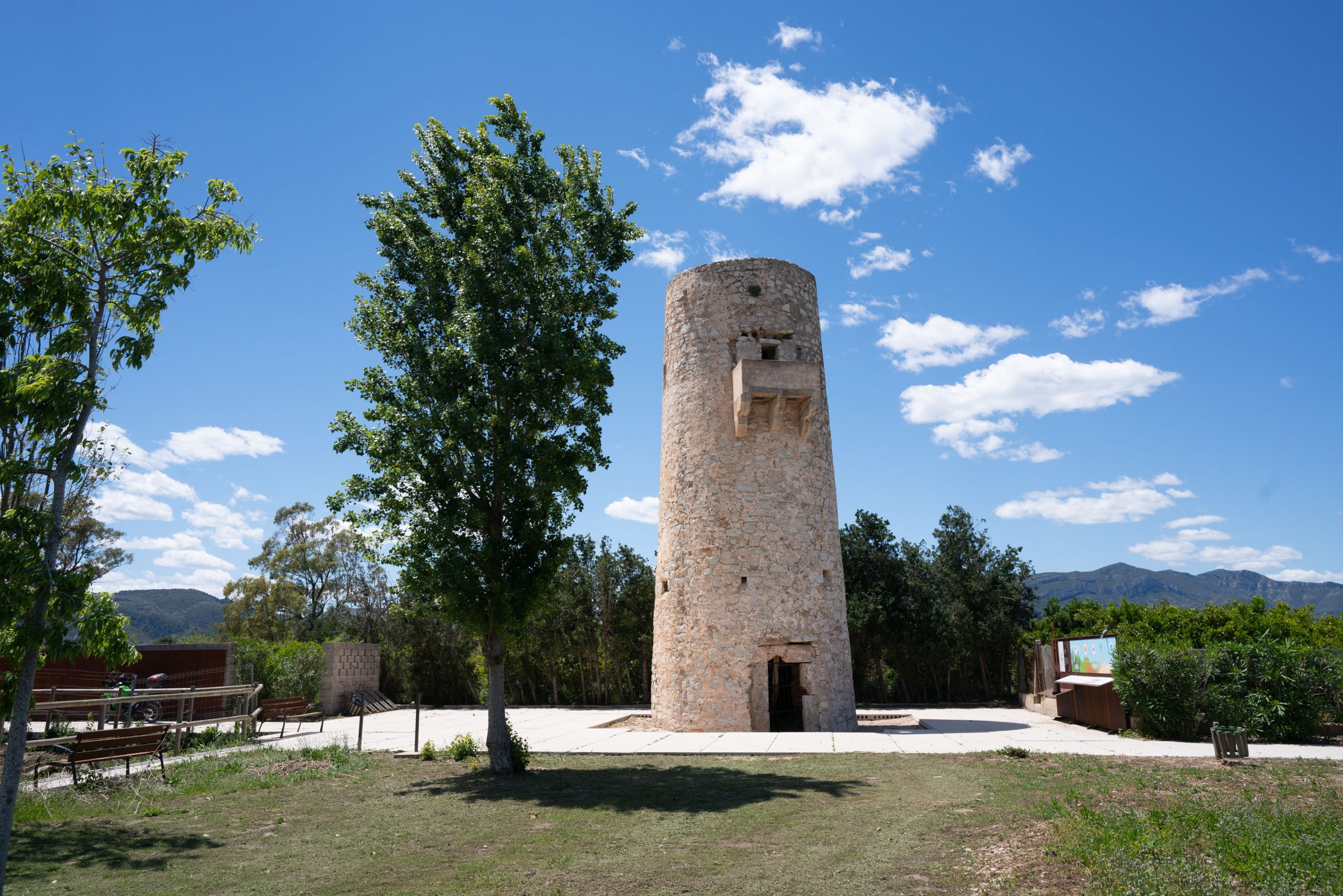 Tower exterior
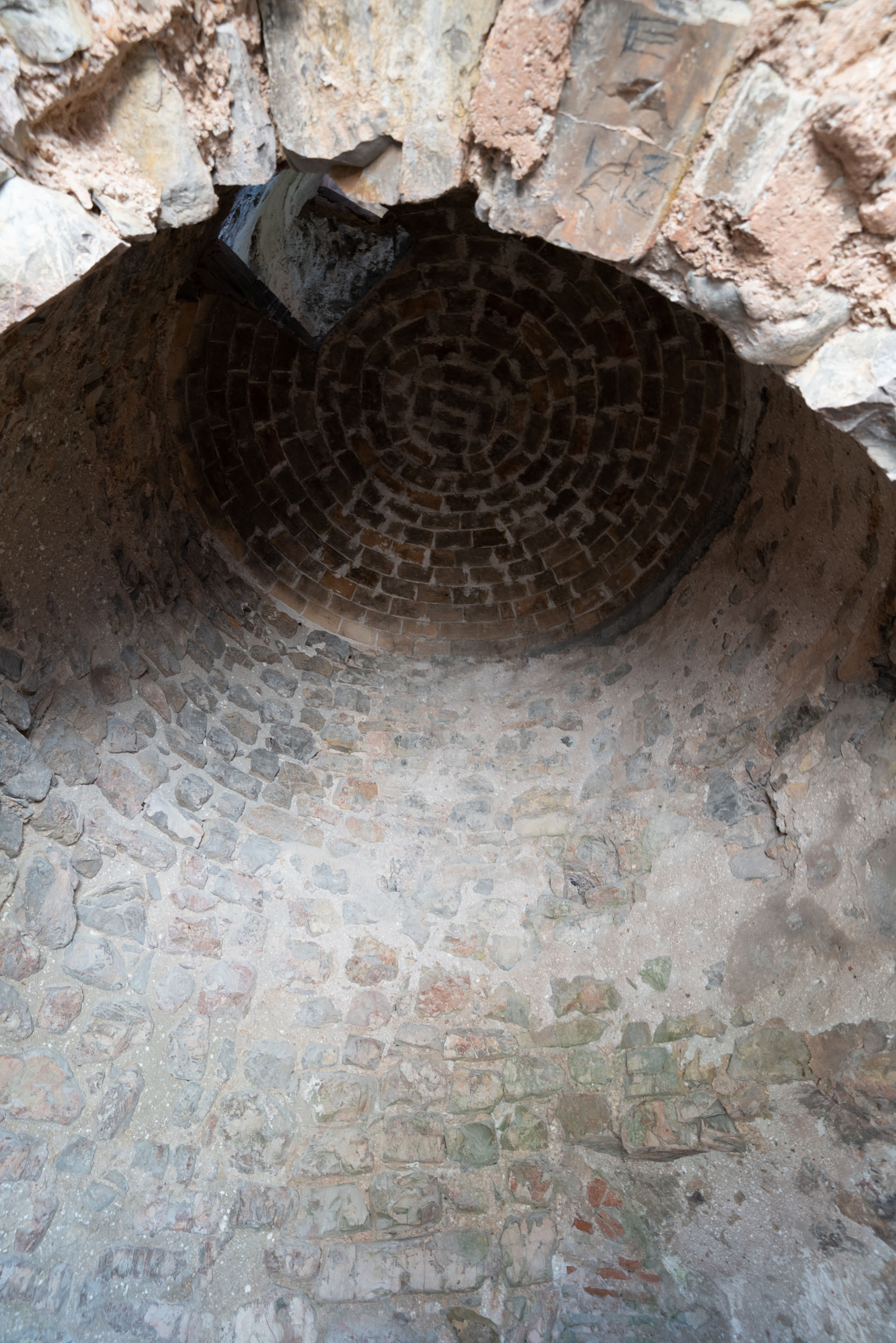 Interior
Bonfires, smoke and removable ladders
The interior still reflects the logic of a building designed to resist and communicate. The different levels were accessed using removable wooden or rope ladders, which could be withdrawn to make entry harder in the event of an attack.
On one of the floors there is a reference to a small reconstructed chimney, used to generate smoke signals during the day. At night, warning was given by fire, allowing the alarm to pass quickly from one watchpoint to another.
Interior features such as wall cupboards, windows, vertical access openings and the upper terrace also help explain how the tower worked as a compact defensive structure.
Between Marenys, water and coastal landscape
Today, the Guaita Tower is visited in a much calmer setting than the one it was created for. The surrounding area has been adapted as a leisure space, with places to rest and enjoy the landscape near Tavernes beach.
The presence of water, vegetation and paths makes it easy to include the tower in a gentle route through the coastal area. It is a good point from which to understand how the city relates to the sea, the wetland landscape, agriculture and the former coastal surveillance system.
The tower works especially well as part of a beach day or a route through nearby natural spaces, adding historical heritage without moving far from the coastline.
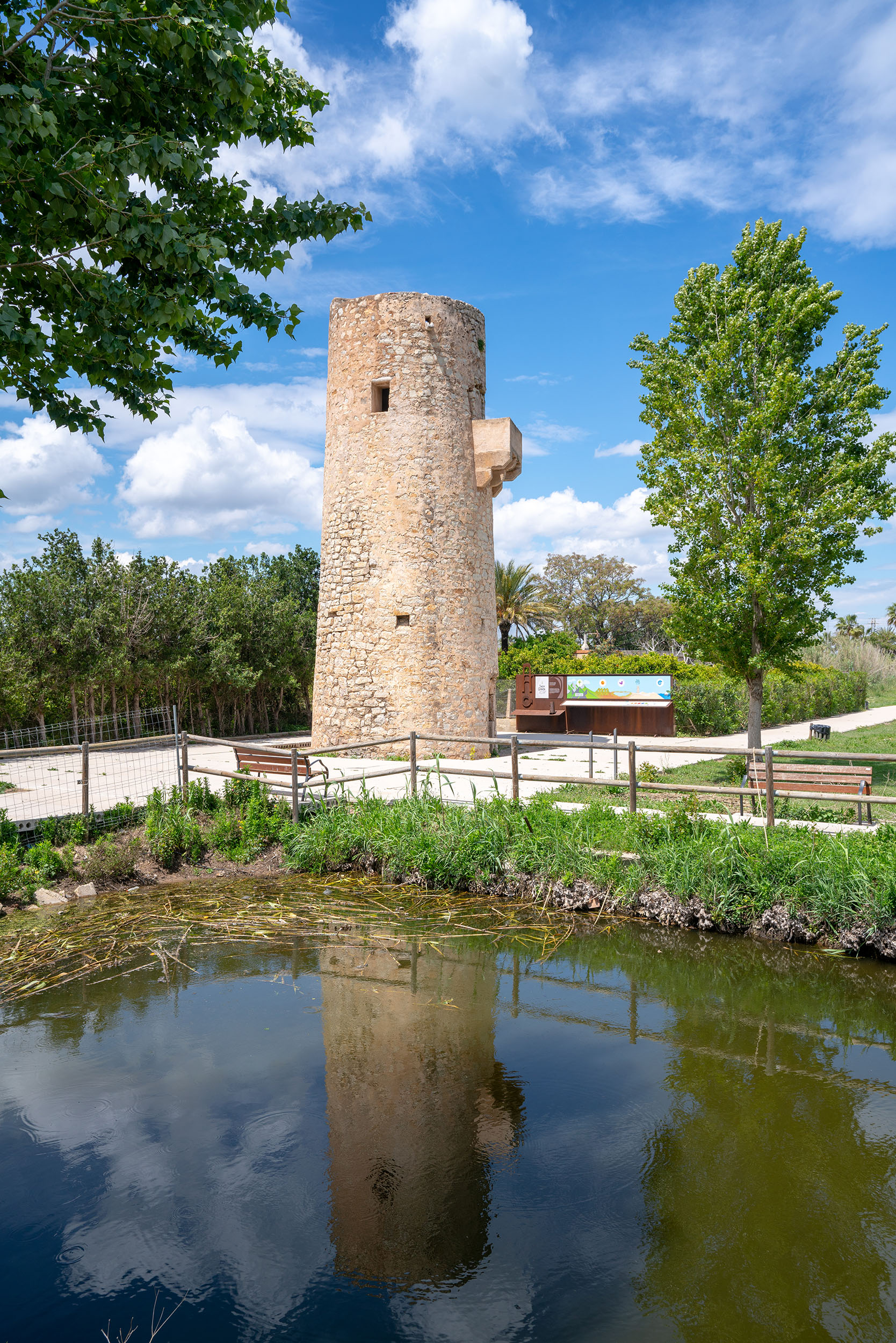 Tower surroundings
Three ways to understand the Guaita Tower
The tower is not an isolated object: it makes more sense when seen from three complementary perspectives.
How to include it in a route around Tavernes
The Guaita Tower fits especially well into a route around the beach, the Marenys area or nearby natural spaces. It can also form part of the emblematic buildings route as the defensive counterpoint to churches, public buildings and cultural spaces in the city centre.
The exterior visit is easy and allows you to observe the tower, the information panel and the leisure area around it. To complete the experience, the 360º Tavernes resource can be used before travelling or as visual support during the route.
Keep discovering Tavernes
Complete your visit with the main sections of the tourist website: ideas to organize the day, urban heritage, history and route planning.
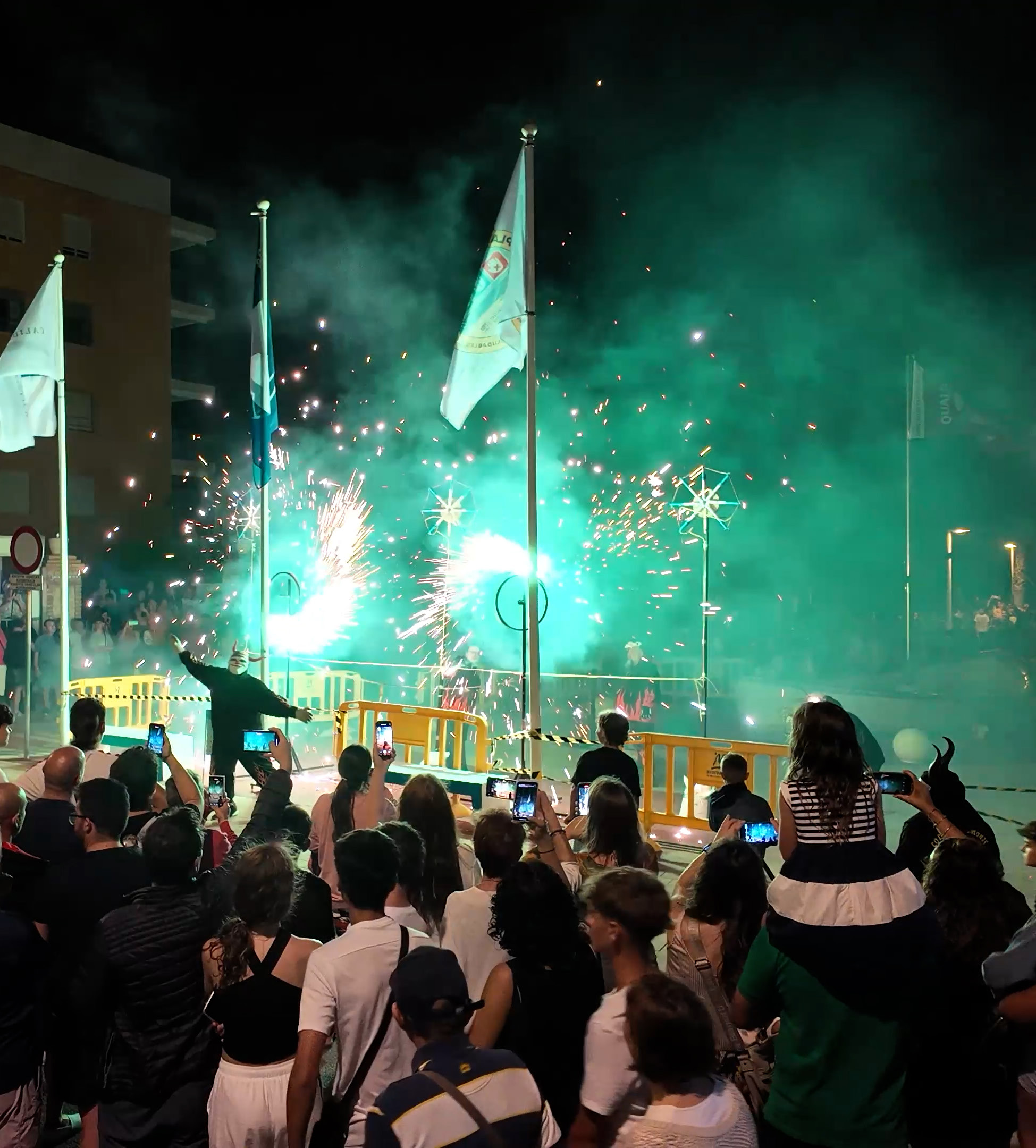
Things to do in Tavernes
Ideas for combining heritage, beach, nature, culture and local plans during your visit.
See things to do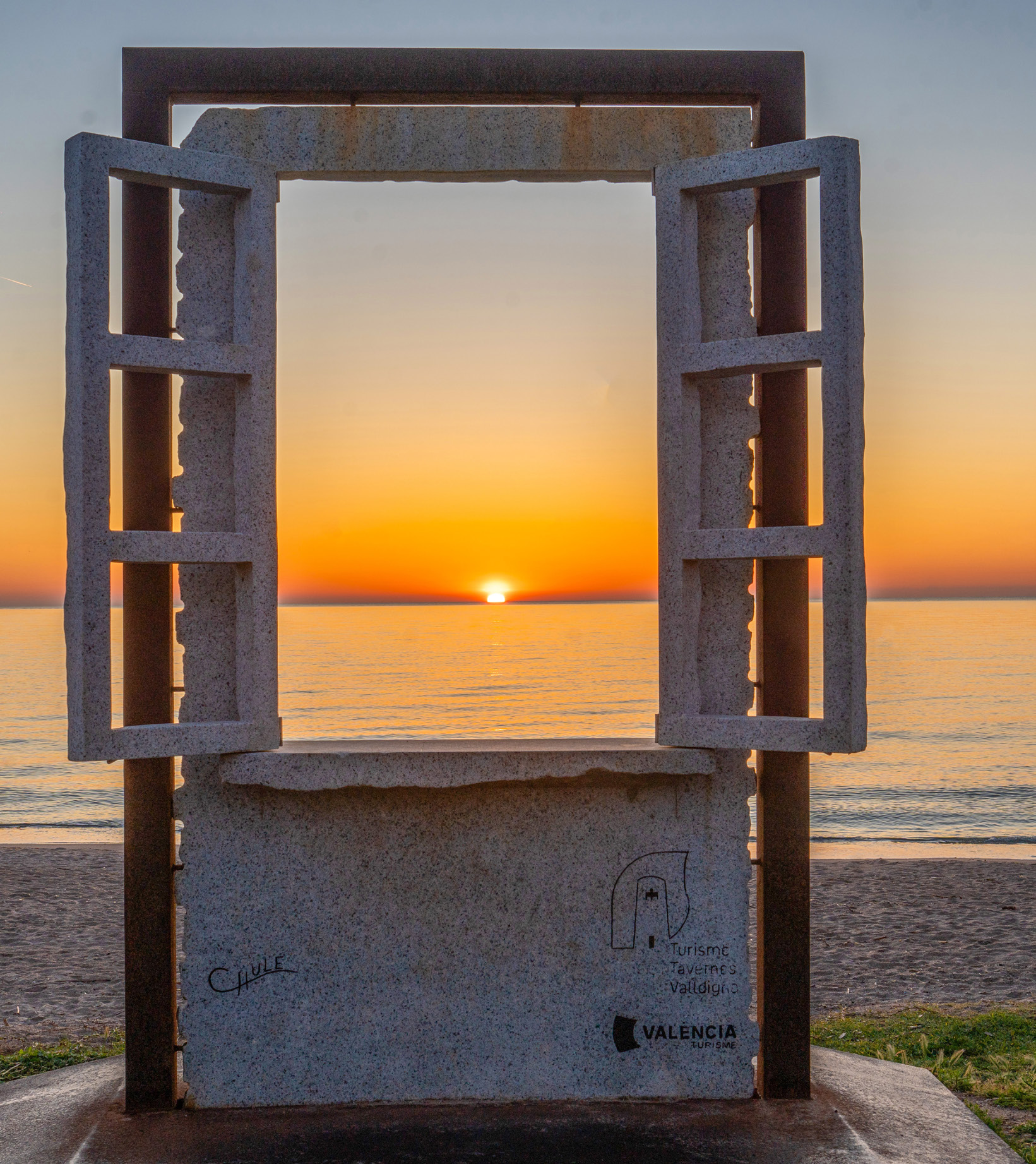
Travel planner
Organize a tailor-made route with heritage, beach, nature, gastronomy and culture.
Plan your visit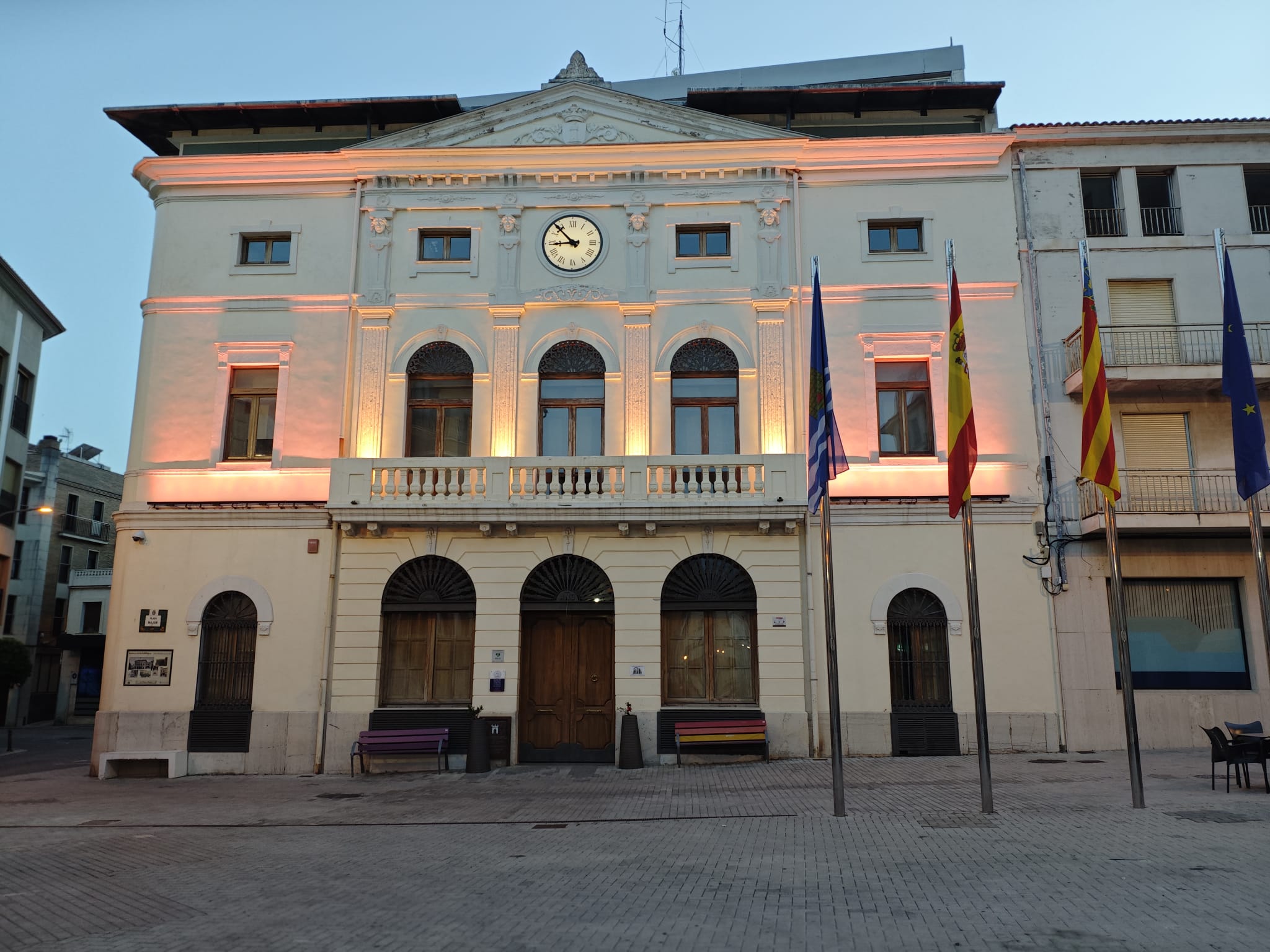
Emblematic buildings
The starting point for exploring churches, public buildings, cultural spaces and urban heritage.
See buildings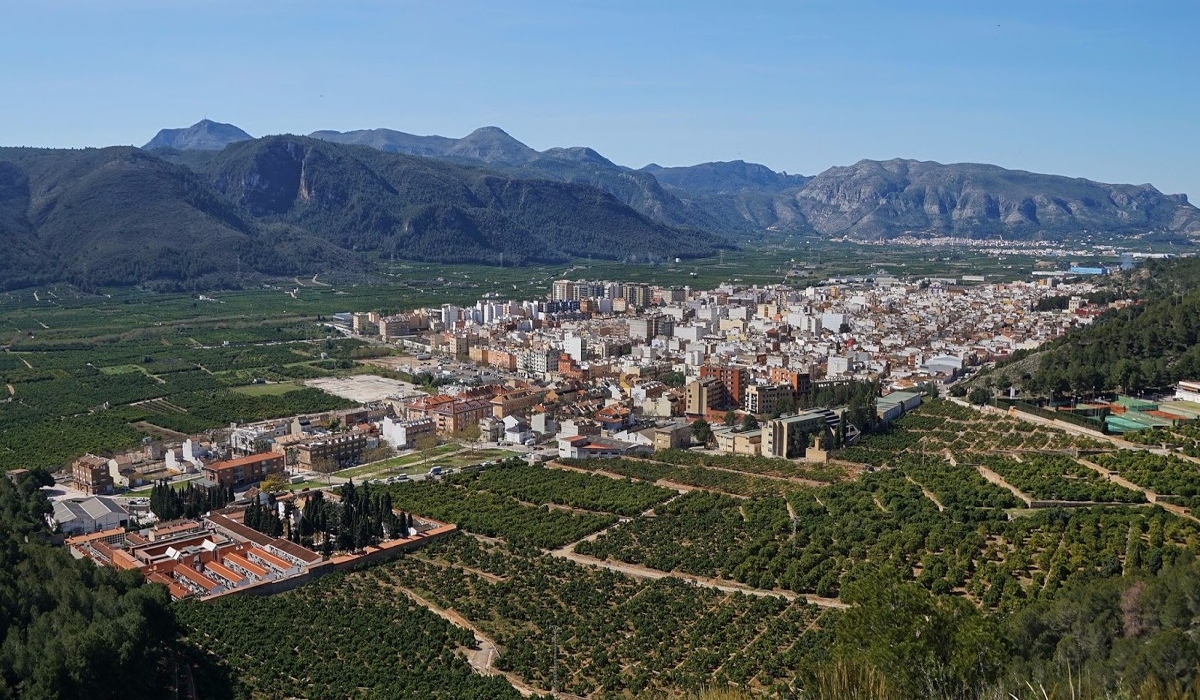
History of Tavernes
A look at the origins, urban evolution and historical memory of the city.
See historyImages to explore the Guaita Tower
Exterior, interior, information panel and natural surroundings help reveal one of the most distinctive defensive towers on the Valencian coast.
The silhouette
The main image presents the tower as a heritage landmark beside the coastal landscape.
The stonework
The preserved masonry makes it possible to appreciate the solidity of the defensive construction.
The inner space
A functional interior designed to watch, resist and communicate danger.
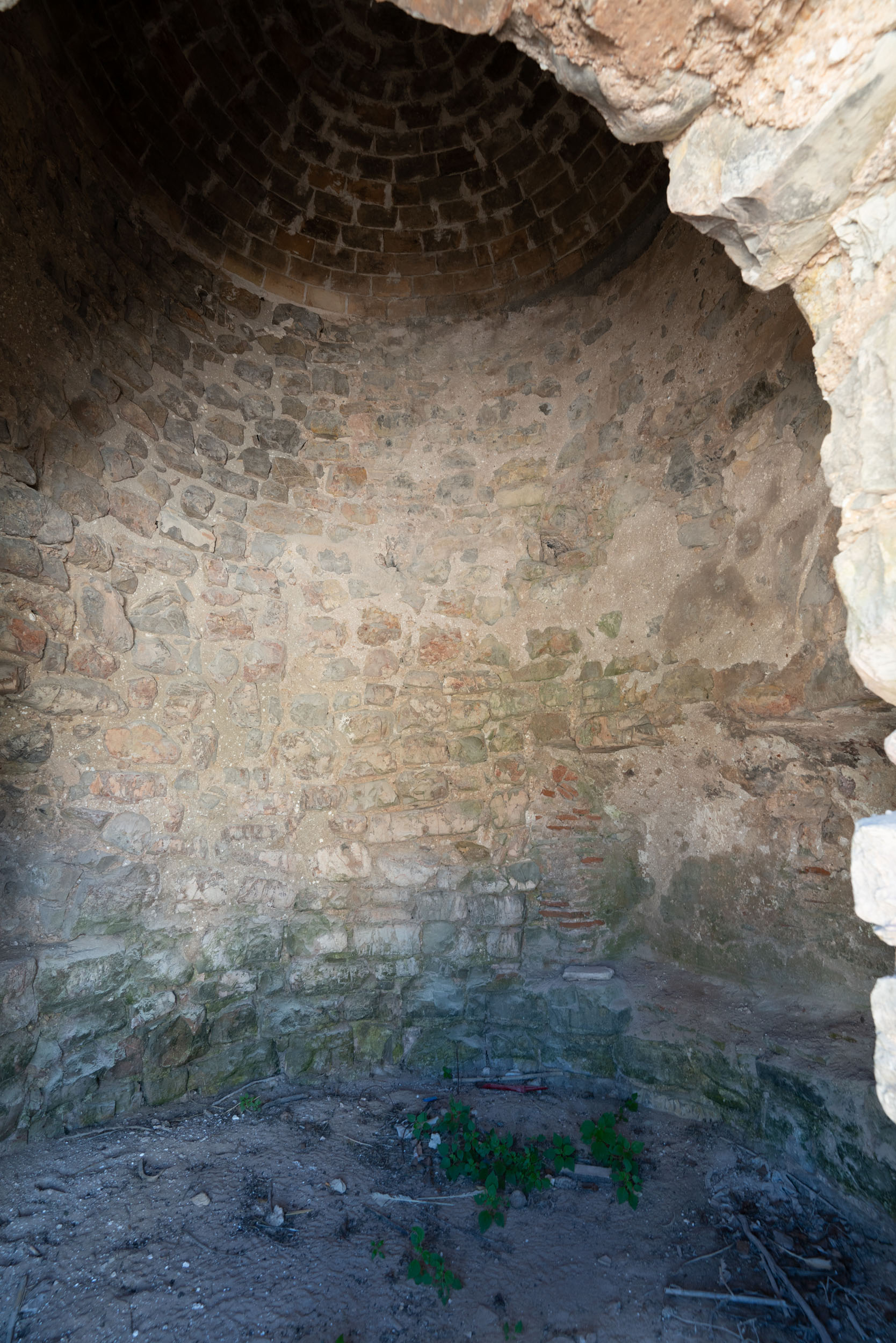
Walls and openings
The internal openings recall the vertical layout of the tower and its access system.
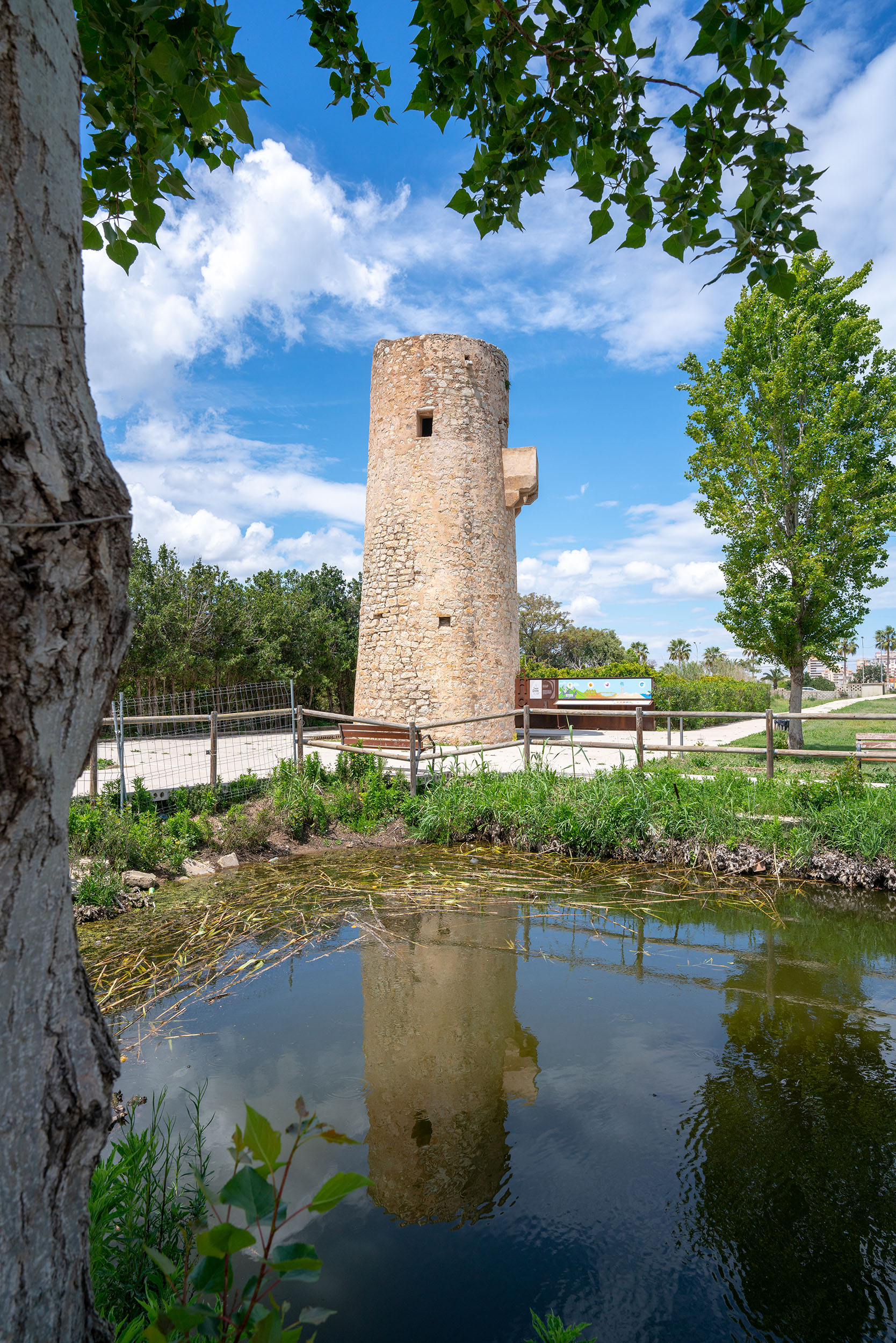
Water and tower
The water and vegetation soften the visit and bring the tower closer to the coastal landscape.
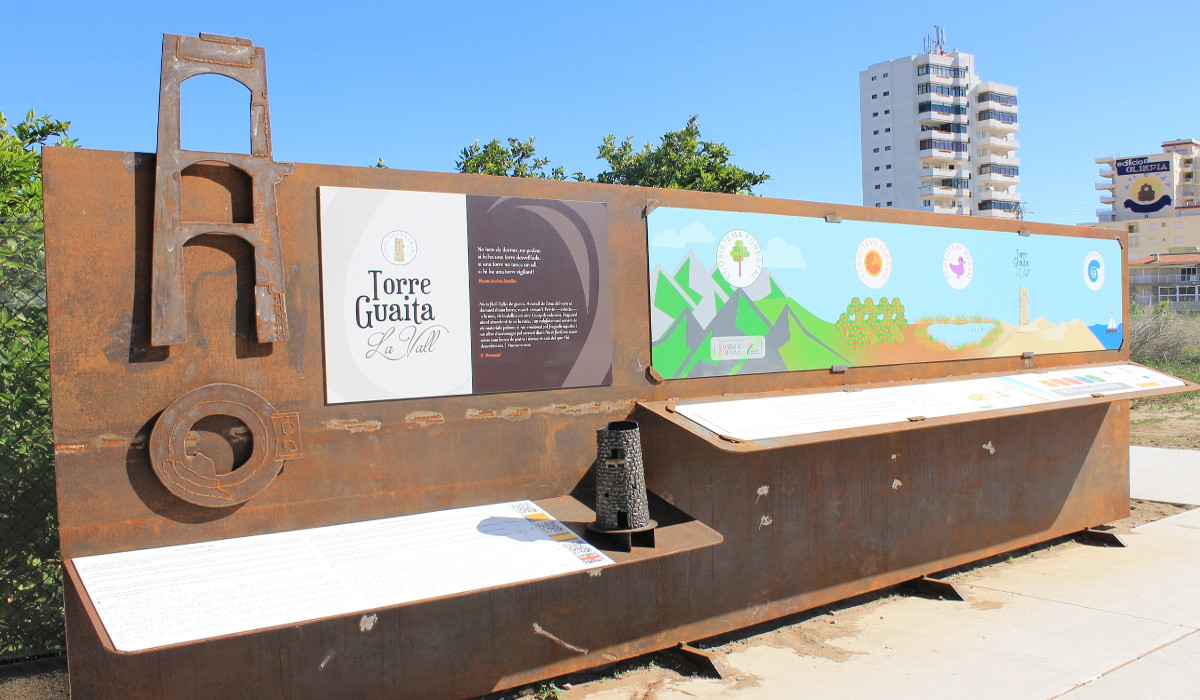
Information panel
The panel helps explain the watchtower function and the heritage value of the site.