



Saint Joseph Church in Tavernes de la Valldigna
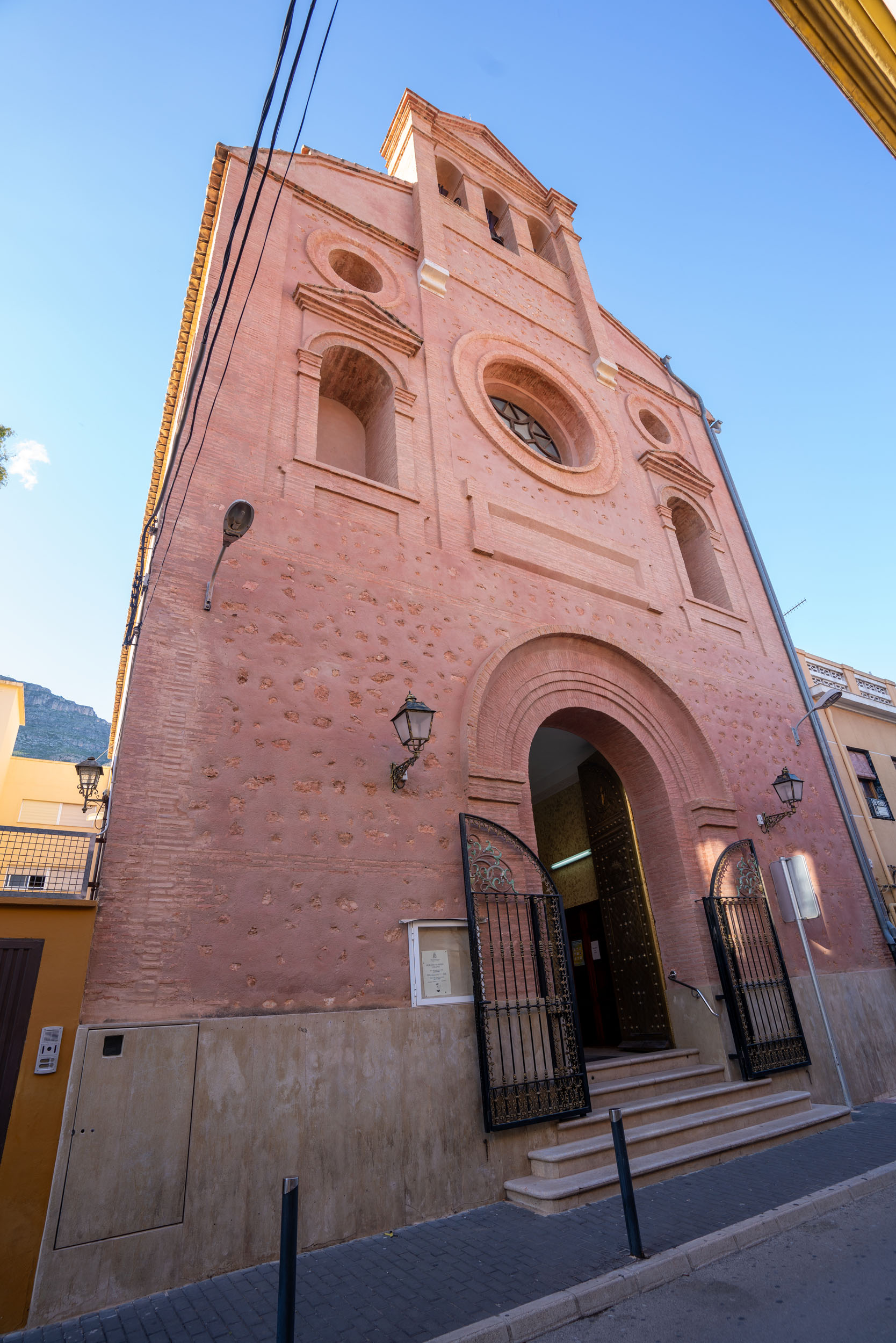
Saint Joseph Church in Tavernes de la Valldigna is one of the religious stops on the urban heritage route through the city. It stands on San José Street, next to the Patronato school, and is closely linked to neighbourhood life, parish memory and the everyday heritage of Tavernes.
The present building belongs to the contemporary period, but it stands on the site of an earlier primitive hermitage. This evolution explains its character: a church that is simple in appearance, yet rich in history, artistic pieces and local identity.
 Saint Joseph Church
What to know before visiting
Saint Joseph Church should not be confused with Saint Peter Church: Saint Peter preserves a highly documented Baroque and Rococo narrative, while Saint Joseph better represents the contemporary, parish and neighbourhood development of the city.
 Interior
From primitive hermitage to neighbourhood parish
The current church belongs to the contemporary period and developed from an earlier hermitage. No clear architect or artist has been preserved for the modern building, but its interest lies precisely in that continuity: from a small devotional space to a church linked to a stable parish community.
Its modern history is better understood through its surroundings. The church stands next to the Colegio San José Patronato, an institution born under parish protection at the end of the 19th century. On 2 August 1899, Antonio Gómez Cerezo donated land for educational, moral and religious purposes, reinforcing the social role of this area of Tavernes.
Saint Joseph is more discreet than Saint Peter, but it offers a complementary reading of the city: close religious heritage, neighbourhood life and devotional continuity.
A single nave with side images
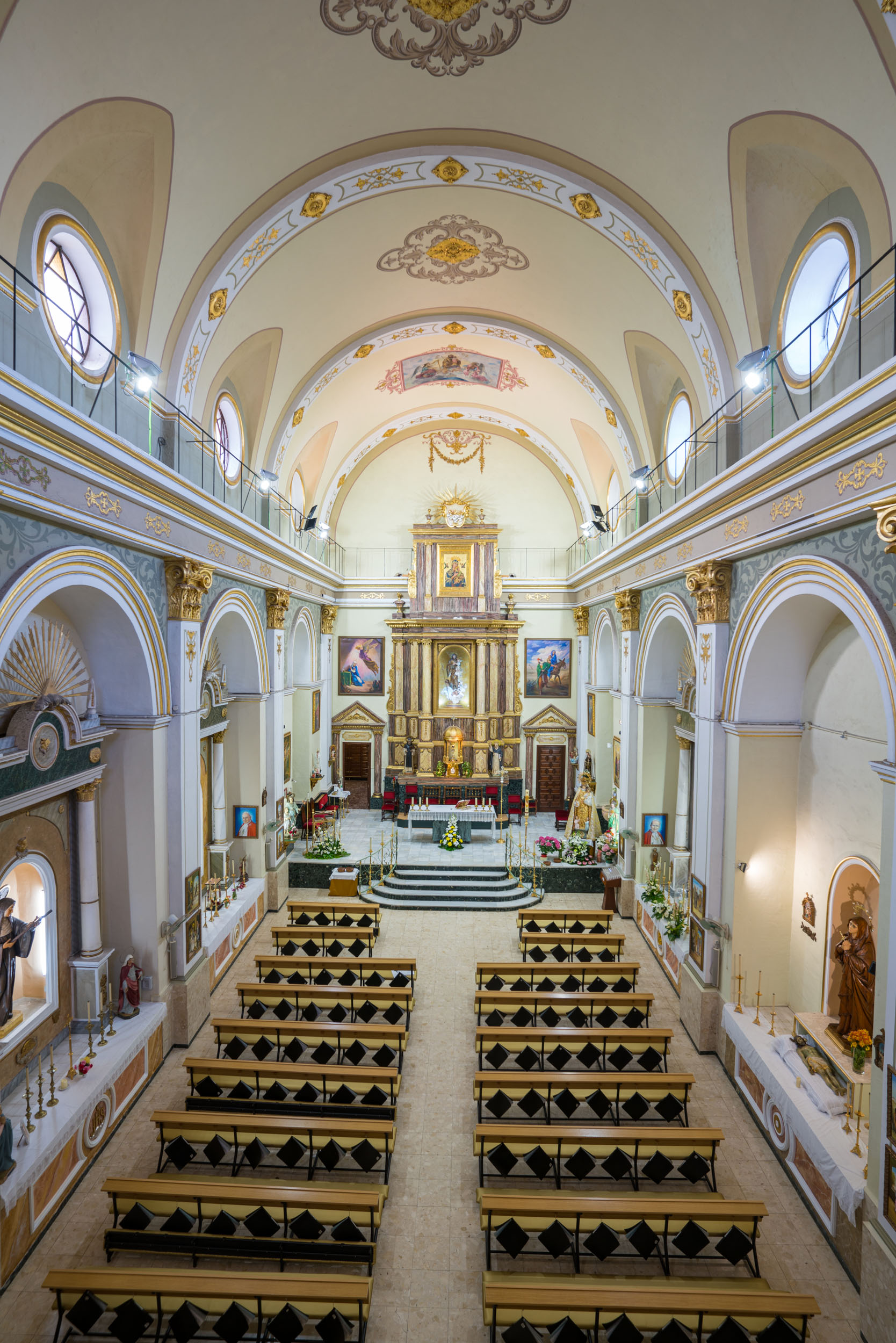
The interior of Saint Joseph Church is arranged as a single nave. This layout makes the church easy to read: entrance, central aisle, side images, altar and a quiet space for worship and reflection.
Among its points of interest is a replica of the Holy Chalice of Valencia Cathedral, a piece that connects the visit with one of the most recognisable religious symbols in Valencia. The image of Our Lady of Sorrows also deserves attention, as it is regarded as a devotional and artistic element of local significance.
- Simple and direct central nave.
- Images of saints along the sides.
- Replica of the Holy Chalice.
- Our Lady of Sorrows as a notable devotional piece.
 Altar
Altar
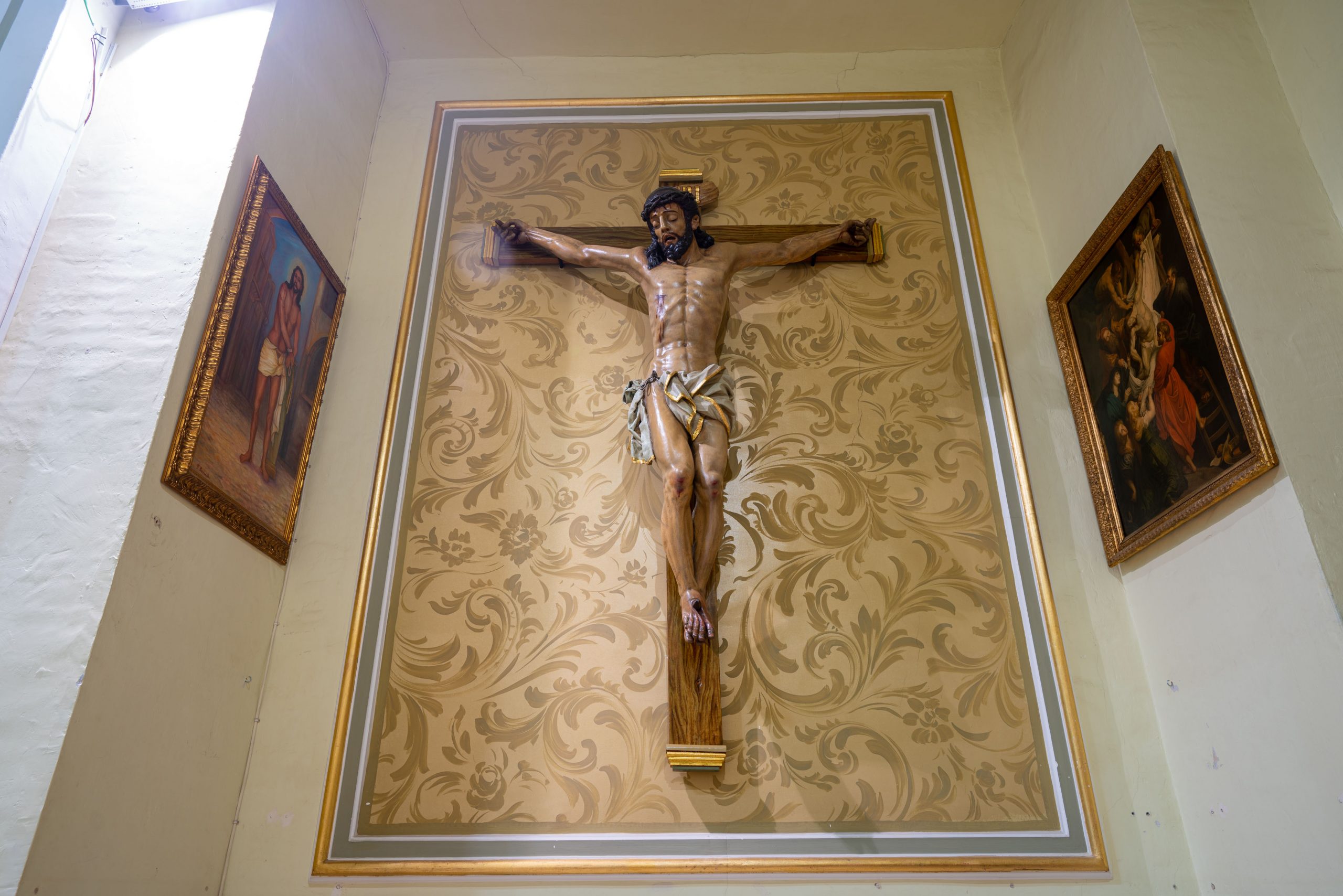 Image of Christ
A living church within the religious calendar
Saint Joseph Church functions as a place of worship and as a neighbourhood landmark. Its devotional images, its relationship with the Patronato and its everyday use help explain it as part of the religious and social life of Tavernes.
This dimension is important for the visitor: the experience is not only about looking at a façade, but also about approaching a space that preserves community memory. In the urban context, Saint Joseph completes the heritage route together with Saint Peter Church, El Calvario and other emblematic buildings in the city.
The voice of Saint Joseph in Tavernes
Bells are part of the identity of any parish. At Saint Joseph, a restoration completed on 30 December 2005 is documented. The work was carried out by Industrias Manclús and included cleaning the bronze bells, installing wooden yokes, electronic motors, external hammers and new clappers with safety cables.
Images to look at Saint Joseph in detail
The façade, interior, image of Christ and altar help reveal a church closely connected to the neighbourhood and to the religious heritage of Tavernes.
The exterior
The exterior view places the church on San José Street and integrates it into the urban heritage route.
The nave
The interior offers a clear reading of the space, with a single nave oriented towards the altar.
Image of Christ
The devotional images explain the religious and community dimension of the church.
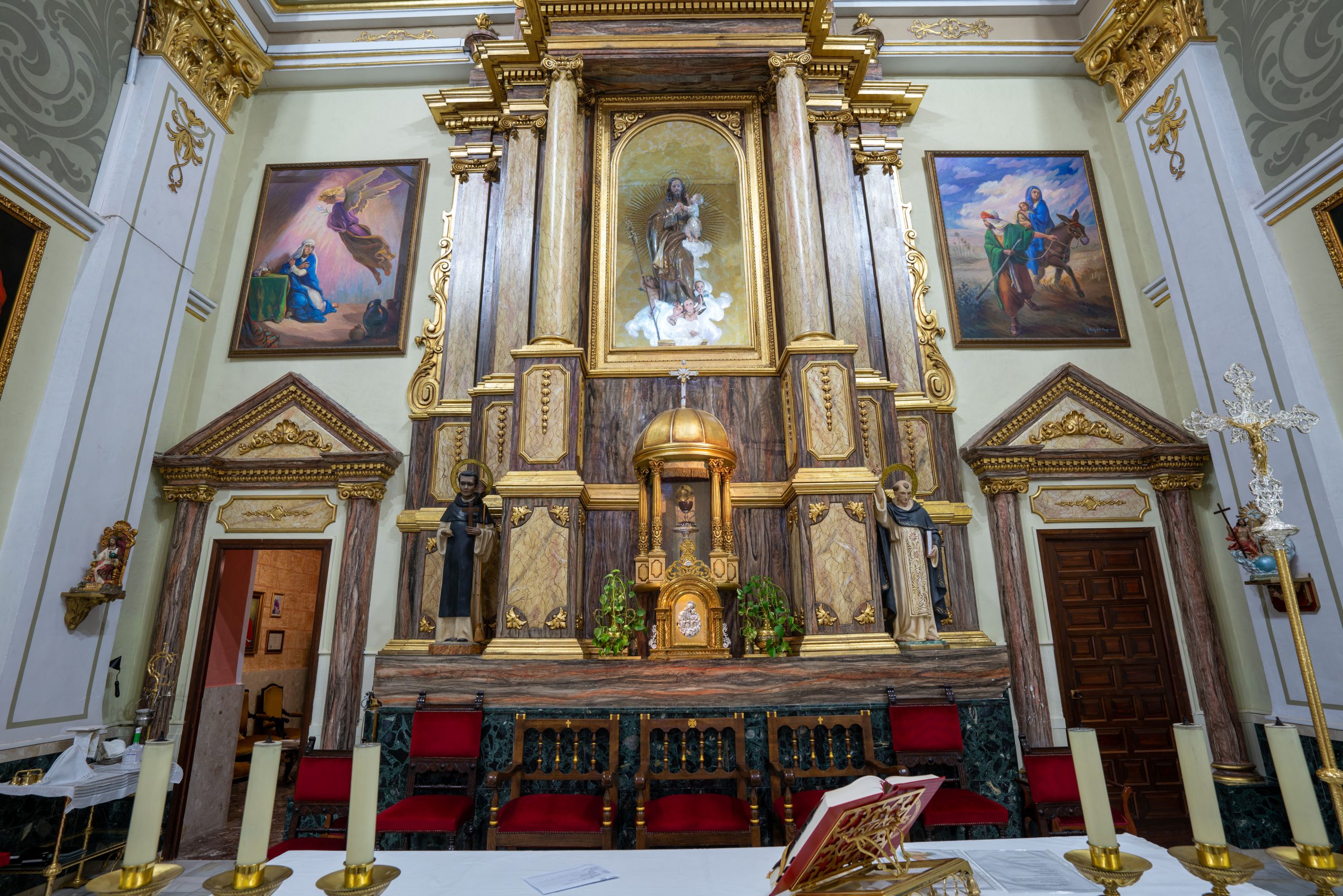
The presbytery
The altar concentrates the liturgical reading of the church and completes the interior visit.
How to include it in a route through Tavernes
Saint Joseph Church fits especially well into the route of emblematic buildings. It can be combined with Saint Peter Church, the City Hall, the Municipal Market, the House of Culture and other points in the urban centre.
To visit the interior, it is advisable to check worship times or availability in advance. You can also complete the visit with the 360º Tavernes resource to get a more visual impression of the space before travelling there.
Keep discovering Tavernes
Complete your visit with the main blocks of the tourist website: ideas to plan your day, urban heritage, history and route planning.

Things to do in Tavernes
Ideas to combine heritage, beach, nature, culture and local plans during your visit.
See things to do
Travel planner for Tavernes
Organise a route tailored to your pace with heritage, beach, nature, gastronomy and culture.
Plan your visit
Emblematic buildings
The starting point to explore churches, public buildings, cultural spaces and urban heritage.
See buildings
History of Tavernes
A look at the origins, urban evolution and historical memory of the city.
See history