



The Creus Trek in Tavernes de la Valldigna
The Creus Trek in Tavernes de la Valldigna is one of the city's most complete hiking routes: it connects the urban center with the Les Creus mountain, ascends via the PR-CV 38 trail, passes along ancient mountain paths, and reaches the Alto de las Cruces peak, a natural balcony rising 540 meters above la Valldigna.
It is an excellent route for understanding the landscape of Tavernes: the defence wall, the pinewood, Fontetes de Cantus, the Mossen Ricard shelters, the Sangonera spring and the historic Dels Amoladors path all appear along a route with natural, panoramic and historical value.
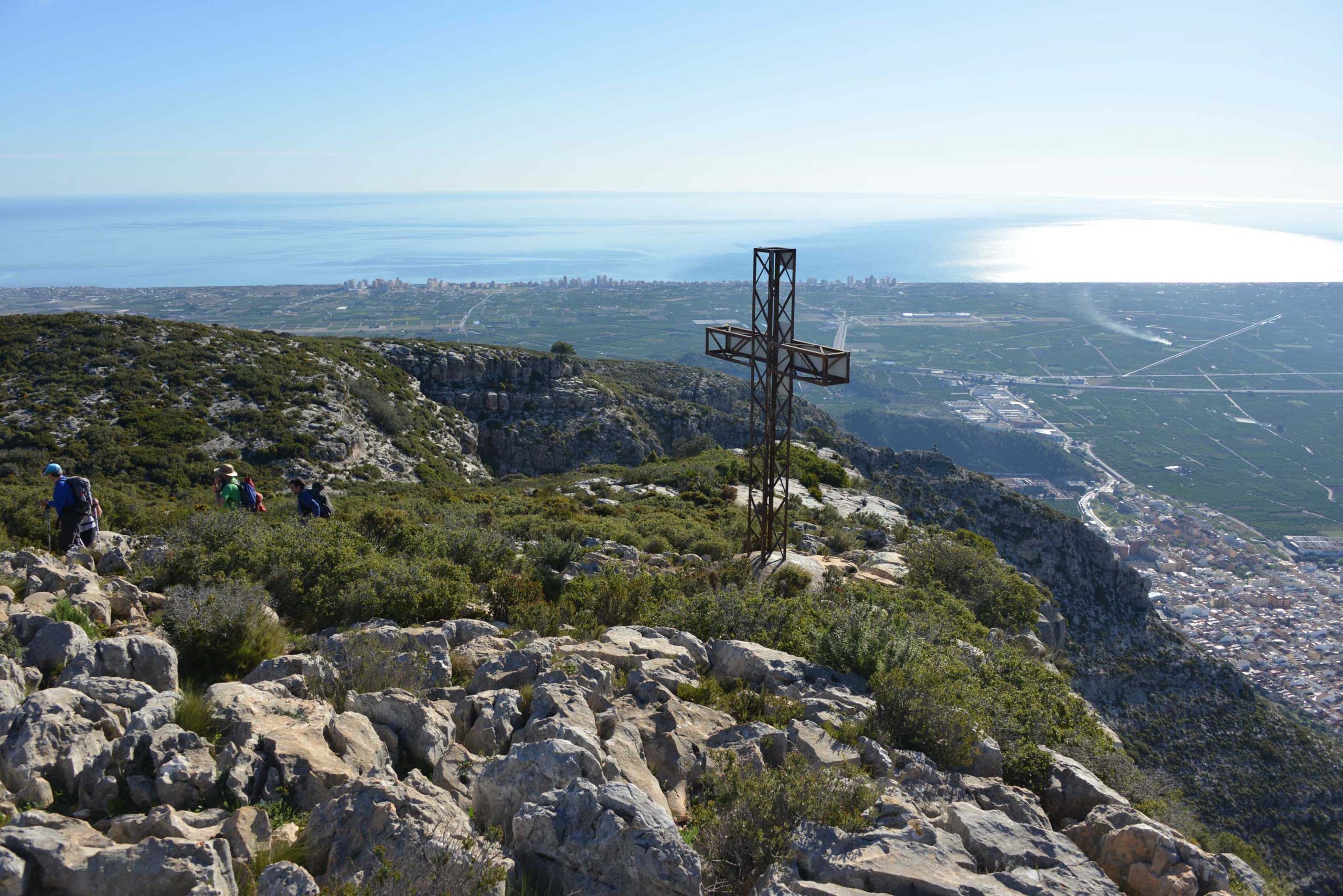 The Creus Trek
Practical information about the Creus Trek
The main route starts in Tavernes, climbs the Les Creus mountain and returns along traditional paths. It is a mountain route: bring water, suitable footwear and check the weather before setting off.
Interactive map of the Creus Trek
Check the main trail of the Creus Trek before starting the step-by-step guide.
Interactive map of the main Creus route
Base route: departure from Tavernes, ascent along the PR-CV 38, Fontetes de Cantus, Alto de las Cruces, Sangonera spring and return via the Dels Amoladors path.
From the sports centre to the defence wall and PR-CV 38
The tourist route begins at the municipal sports center and crosses the urban center until it reaches the defense wall. This first section marks the transition between the city and the entrance to the mountain.
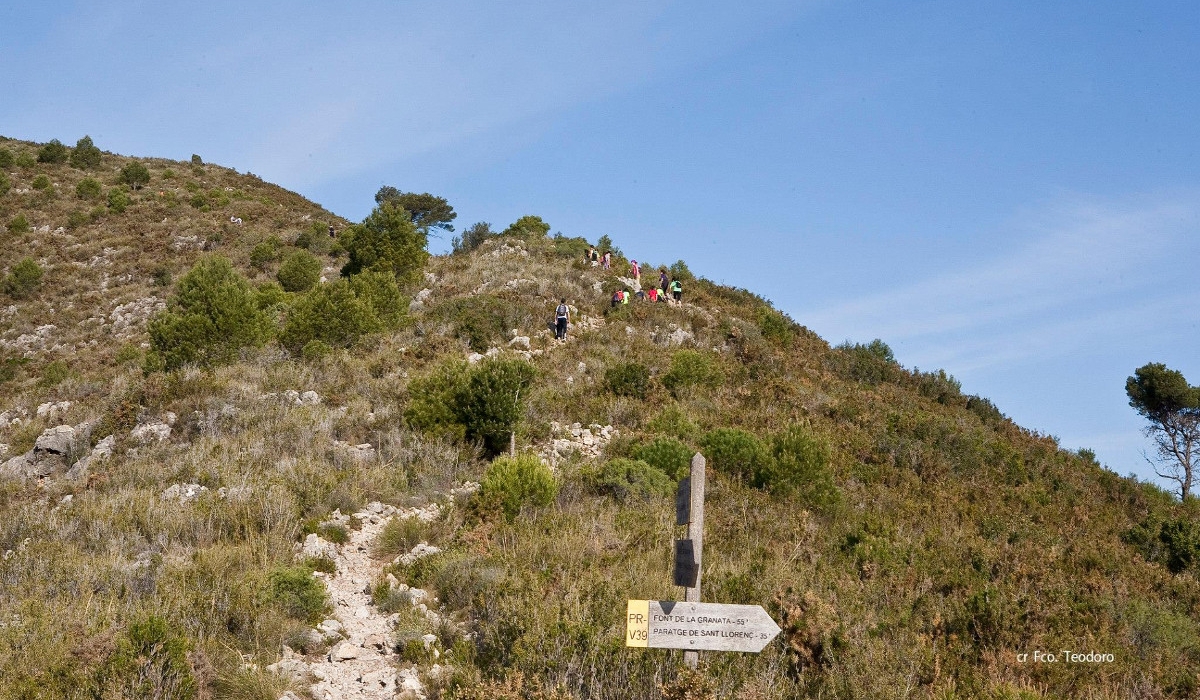
From there, the route continues eastward, following the wall until crossing it over a bridge. At that point, the ascent begins along a path through the pine trees, corresponding to the PR-CV 38. The climb is long, but the zigzag layout helps soften the gradient and allows you to gain height progressively.
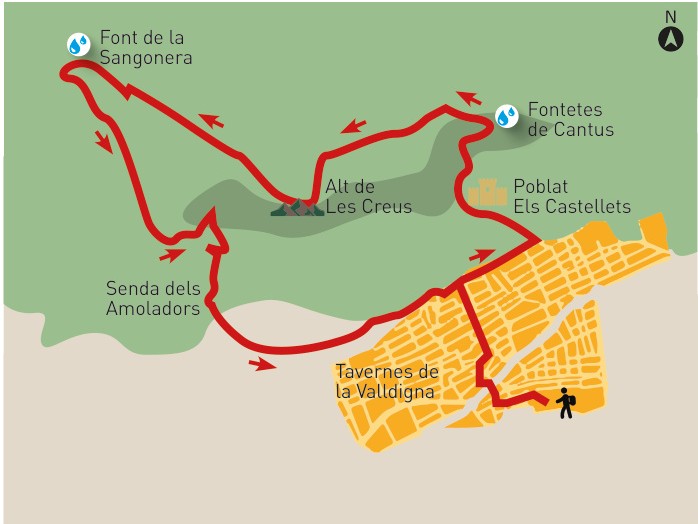 Route map
Iberian settlement, Gebalcobra castle, and Les Fontetes de Cantus
At the end of the pine forest, you will find a sign pointing towards the Iberian settlement. The trail passes along a rock face featuring remains linked to the ancient settlement and the Gebalcobra castle, dating from the Moorish period. This part of the route connects the trail with the ancient history of the mountain.
Further ahead, the slope levels out until you reach the Fontetes de Cantus, a spring that emerges at the base of a rock. In summer it may carry very little water. Nearby are the shelters de Mossen Ricard, una protected area con cavities y rock engravings.
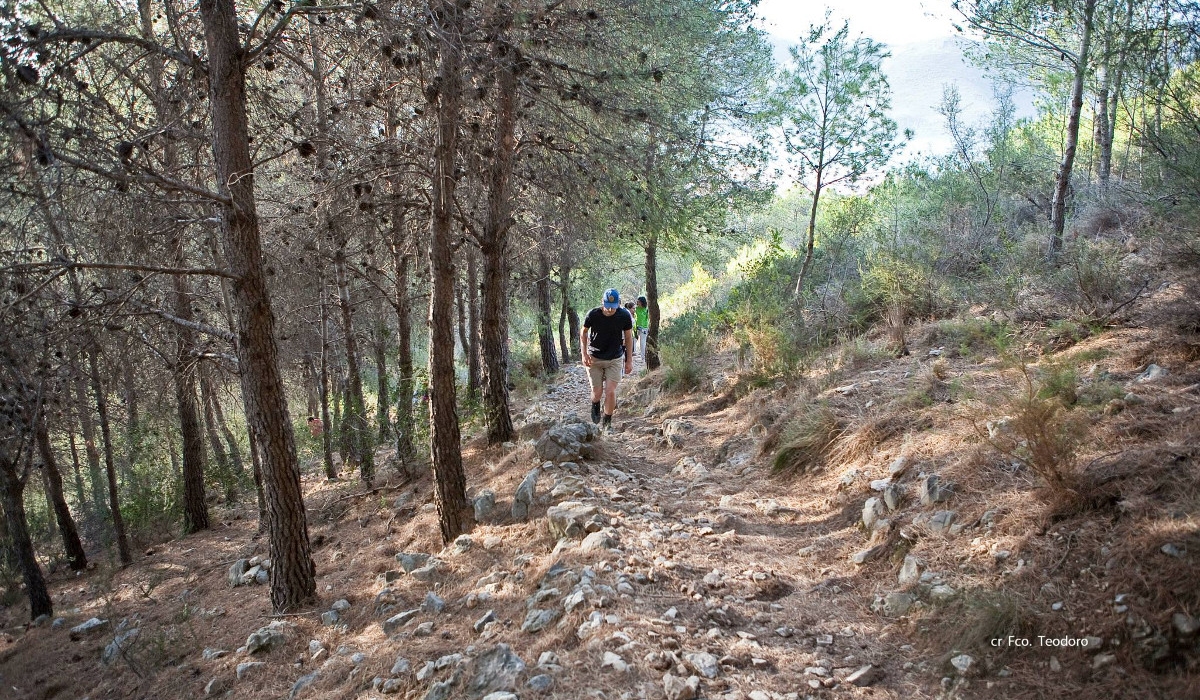 Ascent path
La Escala and Alto de las Cruces
After Fontetes de Cantus, the passage becomes more uncomfortable because of the rocks from a landslide. Then the climb begins through the area known as la Escala, a short section but hard due to its slope. The reward arrives upon reaching the upper part, with an increasingly wider panoramic view.
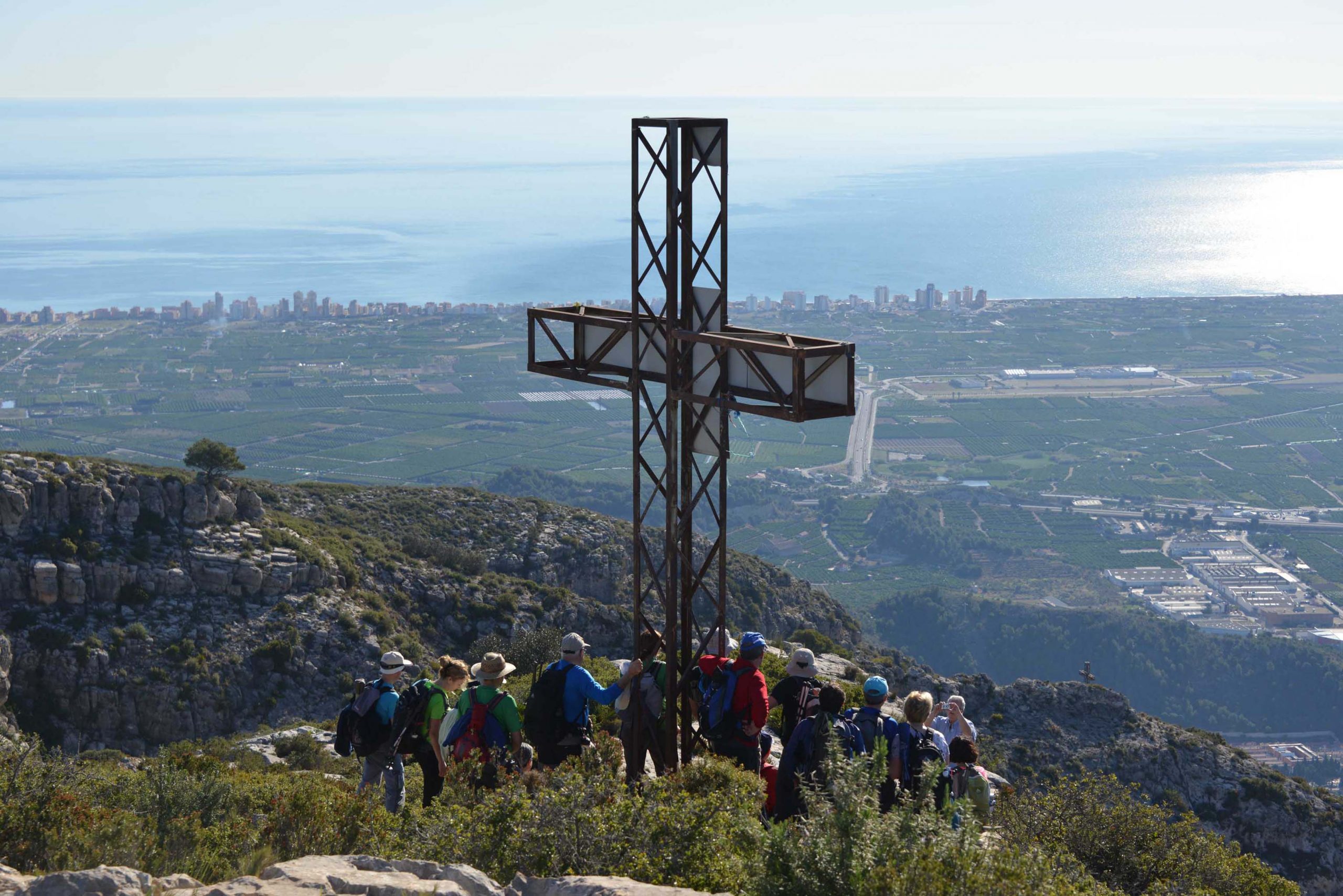
From this area, you can see the rice fields, the Cullera mountain, the Ribera Baixa, l’Albufera, and, in the background, Valencia. The route continues westward until the trail junction that leads to the Alto de las Cruces, the highest point of the route and one of the best natural viewpoints in Tavernes.
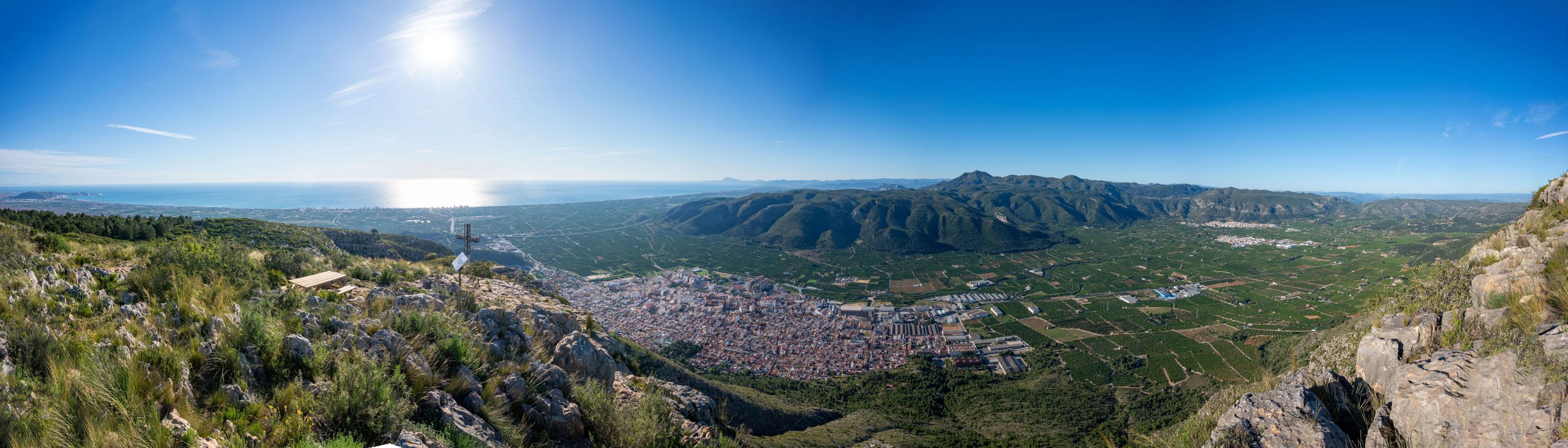 Alto de las Cruces
Sangonera spring and Dels Amoladors path
After the Alto de las Cruces, the path begins a descent, first gentle and then more pronounced. The route passes by a ruined house and an old lime kiln before reaching the surroundings of the Sangonera spring, an area with picnic tables. The spring may be dry in summer.
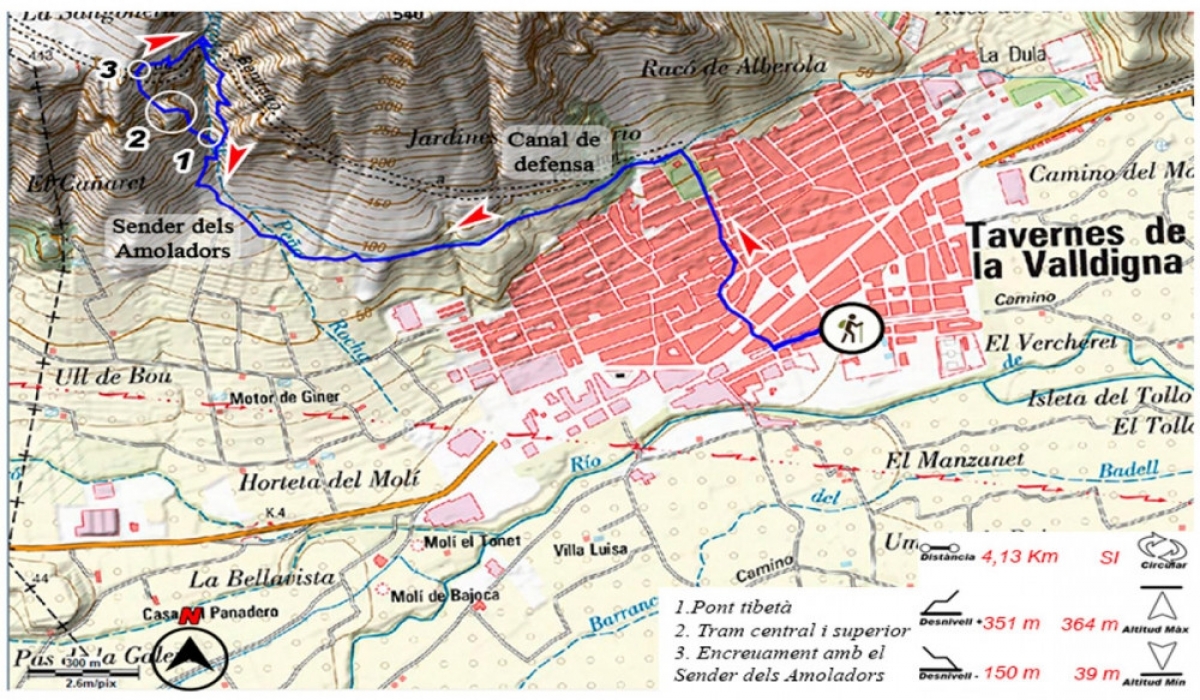
From the Sangonera, the itinerary goes down along the Dels Amoladors path, a historic path built with dry-stone walls and a zigzag layout. In the past, it made it easier for pack animals, such as mules or donkeys, to reach mountain cultivation areas. At the end of the descent, the route returns towards the defense wall and the starting point.
 Dels Amoladors path
The Creus Trek step by step
This structure keeps the main information from the original tourist page and organizes it so visitors can understand the route before starting.
Sports center, urban area and defense wall
Departure from the municipal sports center, passage through the urban center, and arrival at the defense wall before entering the mountain.
Bridge over the wall and PR-CV 38 path
Crossing the defense wall and beginning the ascent on a path among pine trees. The gradient is softened by the zigzag layout.
Iberian settlement and Gebalcobra
Stretch next to the rock wall where references to the ancient Iberian settlement and remains of the Arab castle of Gebalcobra are located.
Les Fontetes de Cantus and Mossén Ricard
Spring at the base of a rock and surroundings of the Mossén Ricard rock shelters, a protected area with cavities and rock engravings.
La Escala and Alto de las Cruces
Short but demanding ascent through la Escala and arrival at the Alto de las Cruces viewpoint, with views of la Valldigna and the coastline.
Sangonera, Amoladors and return
Descent towards the Sangonera spring, passage along the Dels Amoladors path and return towards the defense wall and the city.
There are detours in the area towards Camí dels Borregos or PRV-40, the Les Marujes via ferrata and other variants of the Muntanya de les Creus. Do not improvise detours unless you know the terrain well or have a GPS track.
Advice before taking the Creus Trek
The Creus Trek features prolonged climbs, rocky areas, steep slopes, and descents along historical trails. Bring enough water, hiking shoes, sun protection, and a fully charged phone. In summer, avoid the central hours of the day.
The Cantus and Sangonera springs may carry little water or be dry during dry periods. If you choose variants such as the Three Crosses, Camí dels Borregos, Les Marujes, or La Ratlla, check the track carefully and do not leave the marked paths.
Check AEMET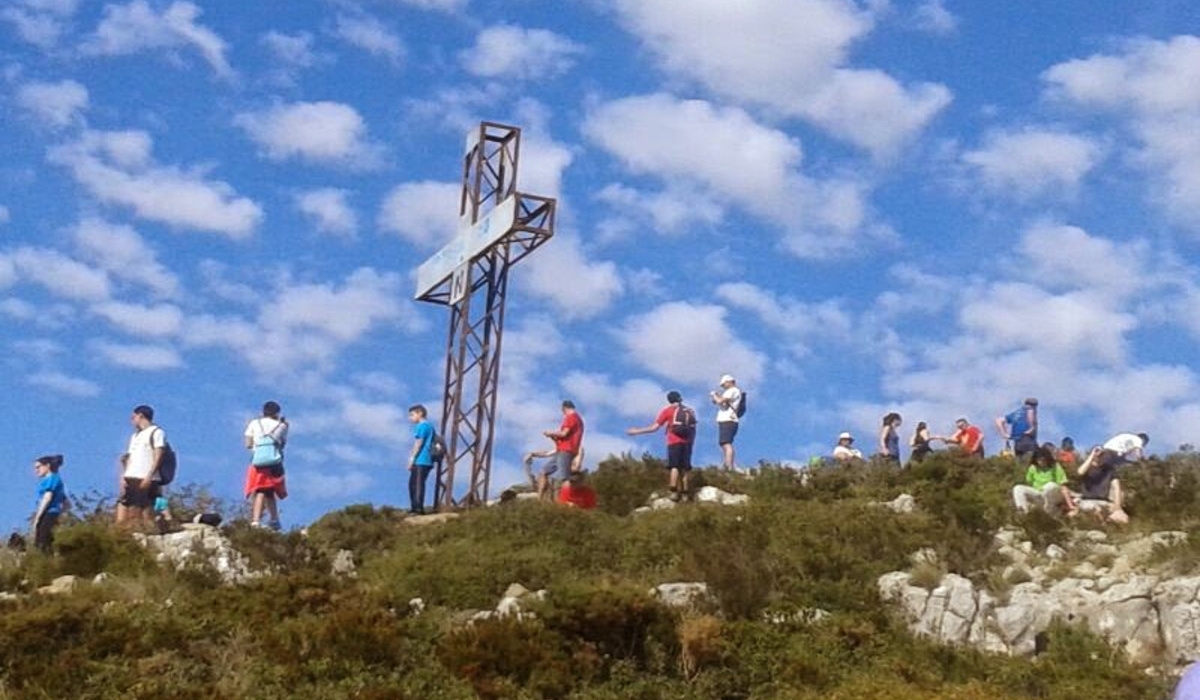 Ascent to Les Creus
Interactive maps of the Creus Trek variants
Check alternative routes here to adapt the walk to the time available, elevation gain and the group’s experience.
Direct ascent to Alto de las Cruces
The shortest variant among the provided GPX files to climb to the Alto de las Cruces and return to Tavernes.
PR-CV 38 · Alto de las Cruces
Variant focused on the PR-CV 38, for a more mountain-oriented reading of the route.
Alto de las Cruces y Dels Amoladors path
Interesting variant for explaining the return via the Dels Amoladors path.
Las Tres Cruces, viewpoint and Sangonera spring
Longer and more demanding variant, passing through las Tres Cruces and the Sangonera spring.
Les Creus via the Granata spring
Variant connecting the Les Creus mountain with the surroundings of la Granata.
Les Creus mountain and la Ratlla
Long and demanding alternative that extends the route towards La Ratlla.
Before setting off: check the weather, signage and path conditions. For longer variants, carry the track on your phone or GPS.
More ideas to complete your visit
Combine the Creus Trek with other pages from the hiking, nature, and trip planning blog.
Via Ferrata Les Marujes
Technical proposal close to the surroundings of the Les Creus mountain.
See via ferrata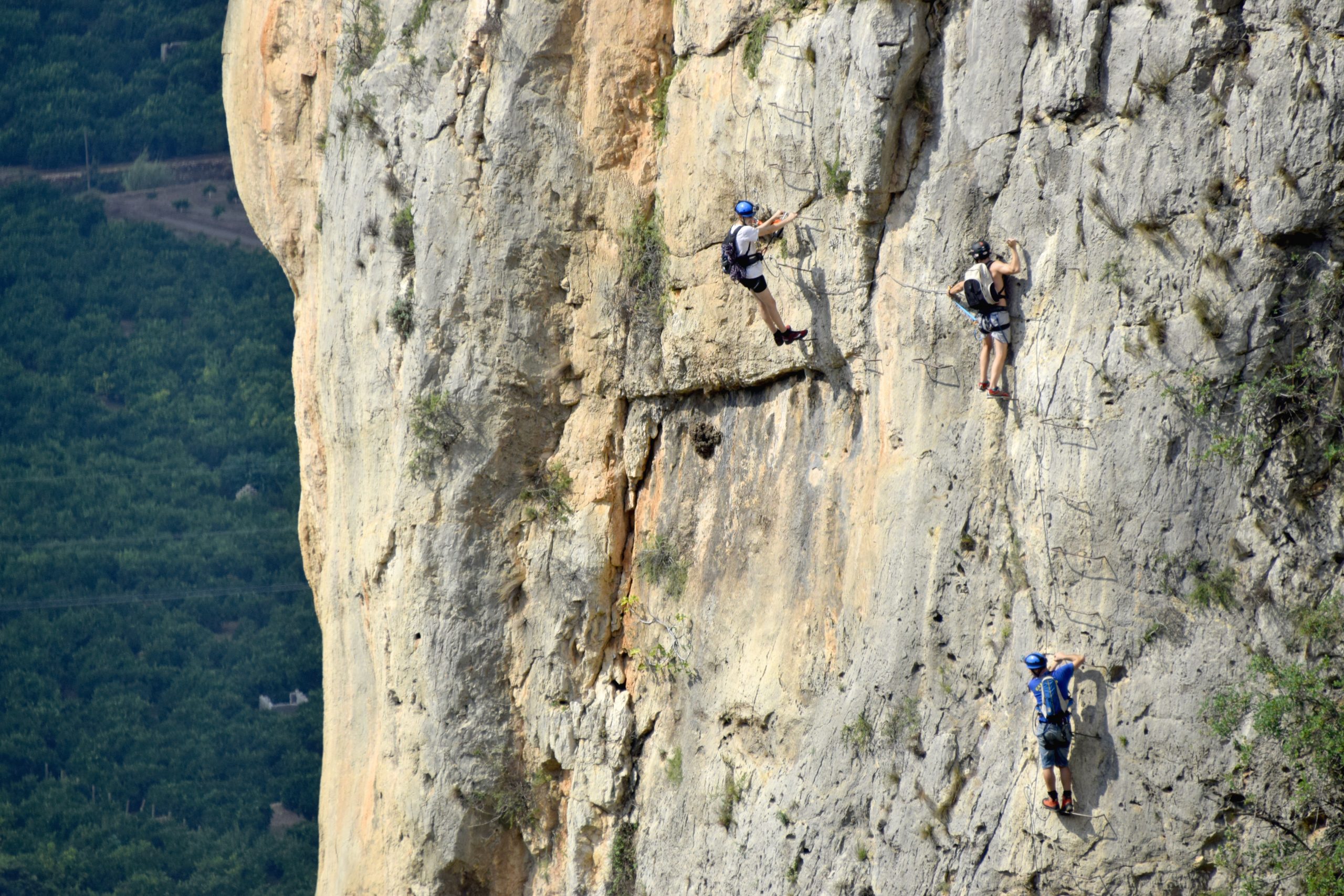
Travel planner for Tavernes
Organize hiking, beach, nature, heritage, and gastronomy.
Plan your visit