

Molí del Pla in Tavernes de la Valldigna
The Molí del Pla, also known as Molí Vell or The Pla Mill, is one of the most valuable examples of hydraulic heritage in Tavernes de la Valldigna. Located beside the river Vaca, on the historic Pla path, it preserves the memory of a city that used water for work, energy and agricultural organisation for centuries.
Its origin is usually placed between the late 17th century and the early 18th century. The mill was linked to the Monastery of Santa Maria de la Valldigna, later passed into private hands after the Mendizábal disentailment and, after a long period of abandonment, was recovered as a cultural and heritage space.
 Molí del Pla
What to know before visiting
The Molí del Pla helps visitors understand the relationship between Tavernes, the river Vaca, the former monastic power and the agricultural culture of La Valldigna. It is not just a building: it is a direct reminder of how water moved the everyday economy.
From monastic mill to recovered heritage
The history of the Molí del Pla brings together several key moments in Tavernes: the power of the monastery, the disentailment, the abandonment of pre-industrial heritage and the public recovery of a unique building.
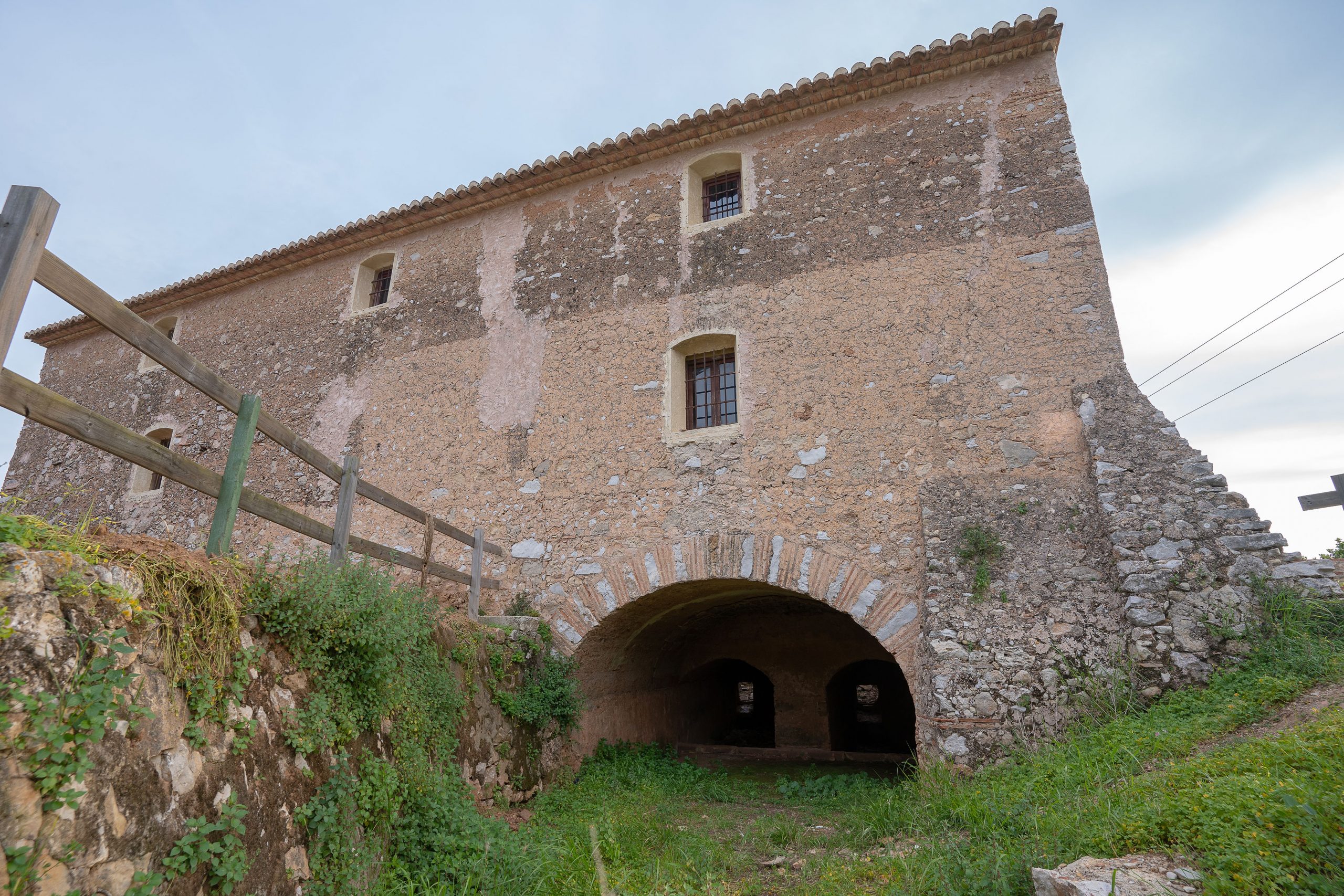
 Side view
A mill linked to the Monastery of La Valldigna
During the period of splendour of the Monastery of Santa Maria de la Valldigna, mills were not simply agricultural facilities. They were strategic points of economic control, because milling cereals meant controlling one of the basic processes of everyday life.
The Molí del Pla formed part of that system, connected to grain milling and the use of the valley’s natural resources. Local people depended on this type of infrastructure to transform wheat, maize, rice or other products into flour.
The value of the Molí del Pla lies in this double reading: it is a rural building and, at the same time, a testimony to an economy shaped by water, cereals and seigneurial power.
Water as the driving force of the mill
The most important element for understanding the building is its underground space. The mill was built over an artificial channel that carried water from the river Vaca. This current entered beneath the building and activated the mechanism that made the grinding stones turn.
Although the original machinery has disappeared, the architecture still preserves the logic of the system: water channel, lower passage, milling room and a resistant structure able to withstand humidity, movement and weight.
- Artificial channel connected to the river Vaca.
- Underground space where the hydraulic process began.
- Ground floor used as the main milling room.
- Robust stone and mortar construction.
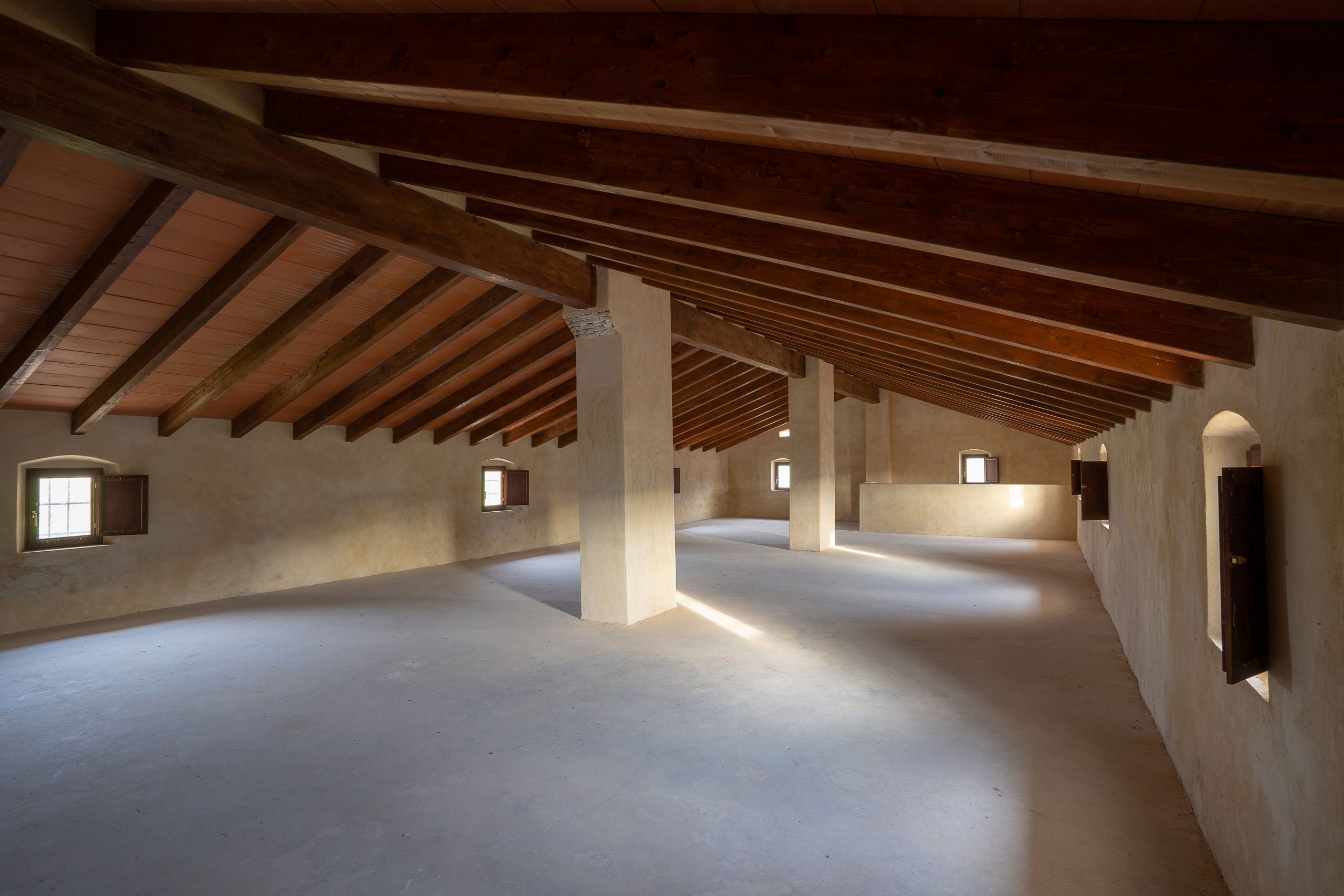 Interior structure
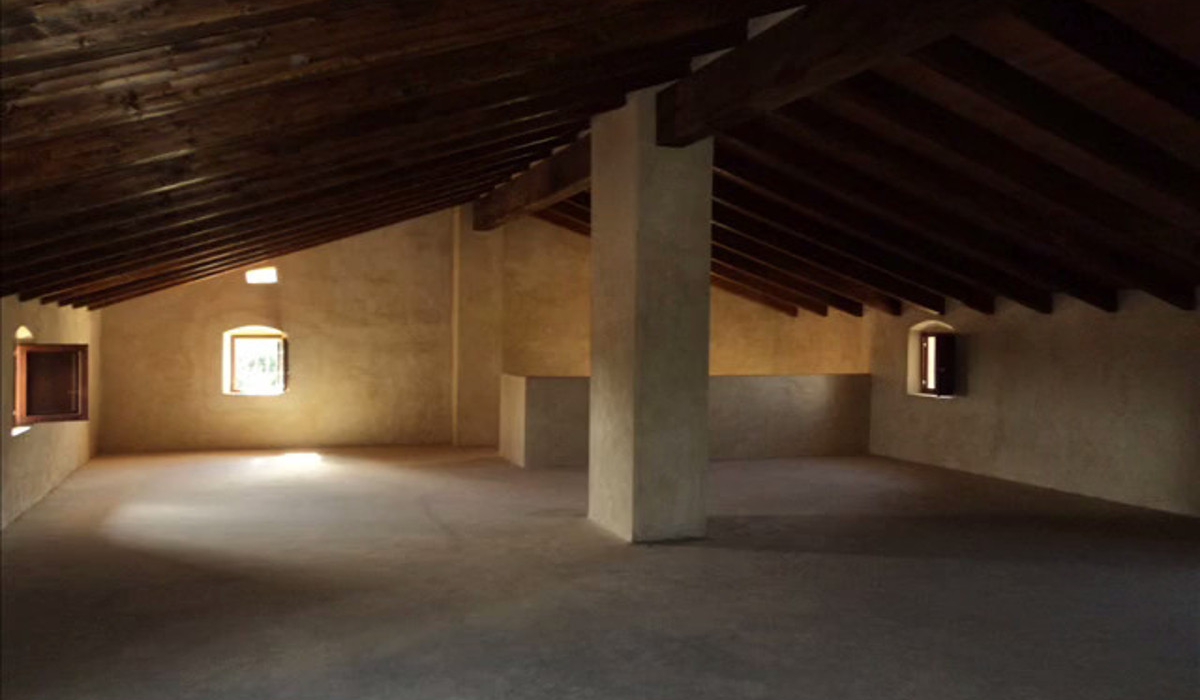 Upper floor
Three levels for work, storage and daily life
The building has a rectangular floor plan of around 160 m² and is organised into several levels. The ground floor was the main working space, where the grinding took place; the upper floor could be used for storage, tools, raw material and the miller’s living space; and the lower level was the technical heart of the mill.
Its construction is functional, solid and closely connected to its surroundings. Stonework and mortar made it possible to resist humidity, the weight of the machinery and the constant passage of water underneath the building.
The present interior no longer contains the old machinery, but the building still clearly explains how a traditional water mill worked.
From abandonment to restoration
After the disentailment, the mill passed into private hands. Over time it fell out of use, lost its machinery and suffered major deterioration, with damage to the roof, damp, cracks and structural problems that threatened the conservation of the whole building.
From 2008 onwards, studies were promoted to assess the condition of the property. The restoration stopped the decline, consolidated the building and returned it to the city as a place of ethnological memory. The rehabilitated mill was officially opened in March 2013.
Since then, the Molí del Pla has been able to host cultural activities such as exhibitions, music recitals and poetry readings, reinforcing its second life as a shared heritage space.
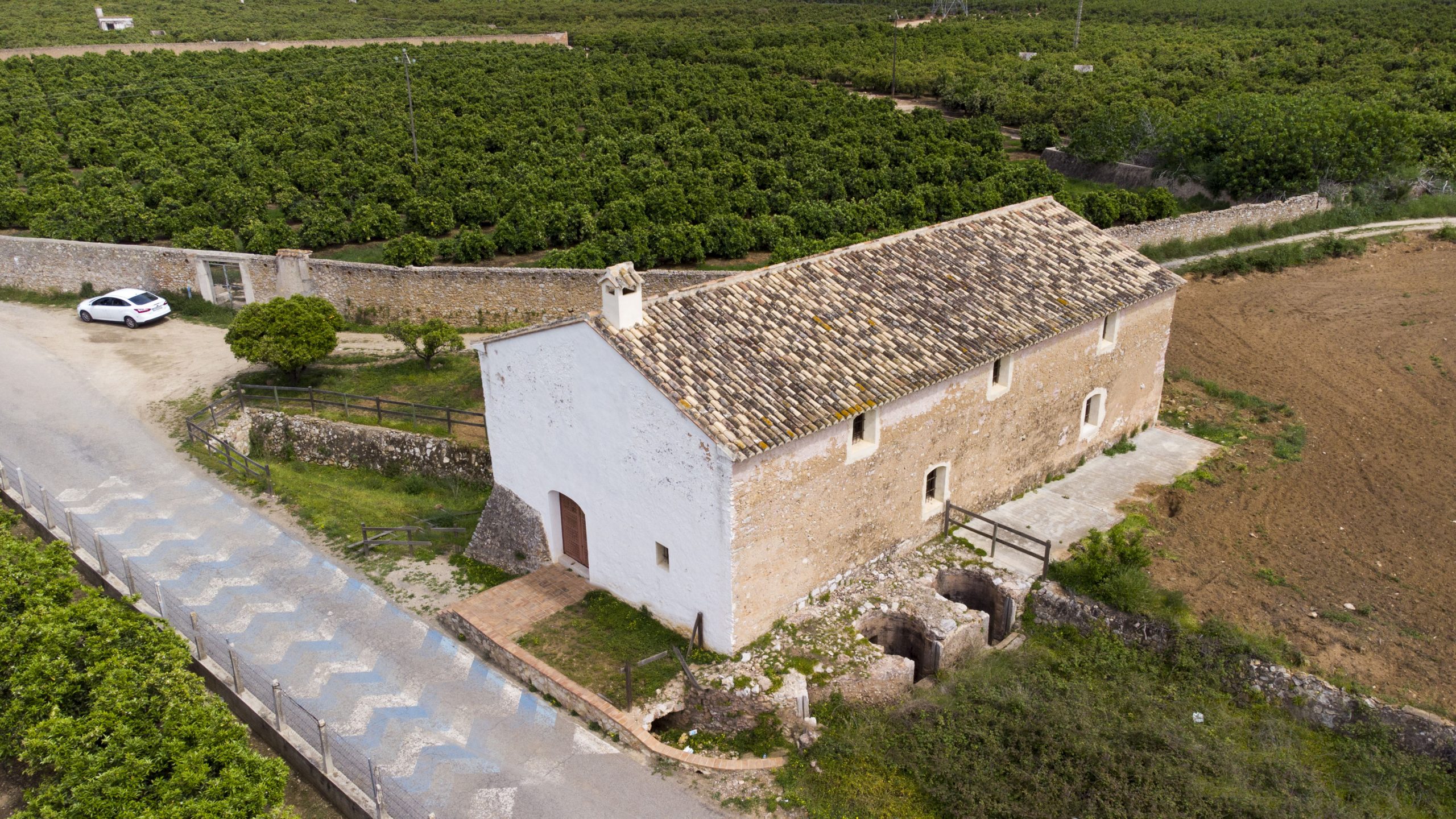 Restored setting
 Recovered interior
Heritage between the city and the fields
The Molí del Pla is close to the urban centre but fully integrated into a rural environment. This position explains its value for visitors: it connects the route through the emblematic buildings with Tavernes’ agricultural memory, the river Vaca and the traditional paths of La Valldigna.
Its visit offers a different reading of local heritage. Alongside churches, towers and institutional buildings, the mill speaks of daily work, food production, the use of water and traditional technology.
Within a heritage route, the Molí del Pla is a perfect stop for understanding the agricultural, hydraulic and pre-industrial Tavernes.
How to include it in a route through Tavernes
The Molí del Pla fits very naturally into a route through the emblematic buildings of Tavernes. It can be combined with the City Hall, the churches of Saint Peter and Saint Joseph, El Calvario, the Guaita Tower and other places that help visitors read the city through its history, landscape and everyday heritage.
When planning your visit, take into account its location beside the river Vaca and the Pla path. The 360º resource for Tavernes can also be used as a visual complement before going there.
Keep discovering Tavernes
Complete your visit with the main sections of the tourism website: ideas for organising the day, urban heritage, history and route planning.
Things to do in Tavernes
Ideas to combine heritage, beach, nature, culture and local plans during your visit.
See things to do
Travel planner
Organise a tailor-made route with heritage, beach, nature, gastronomy and culture.
Plan your visit
Emblematic buildings
The starting point for exploring churches, public buildings, cultural spaces and urban heritage.
See buildings
History of Tavernes
A look at the origins, urban evolution and historical memory of the city.
See historyImages to explore the Molí del Pla
Exterior, interior and aerial views help to understand the building, its relationship with the rural landscape and the recovery of this hydraulic heritage.
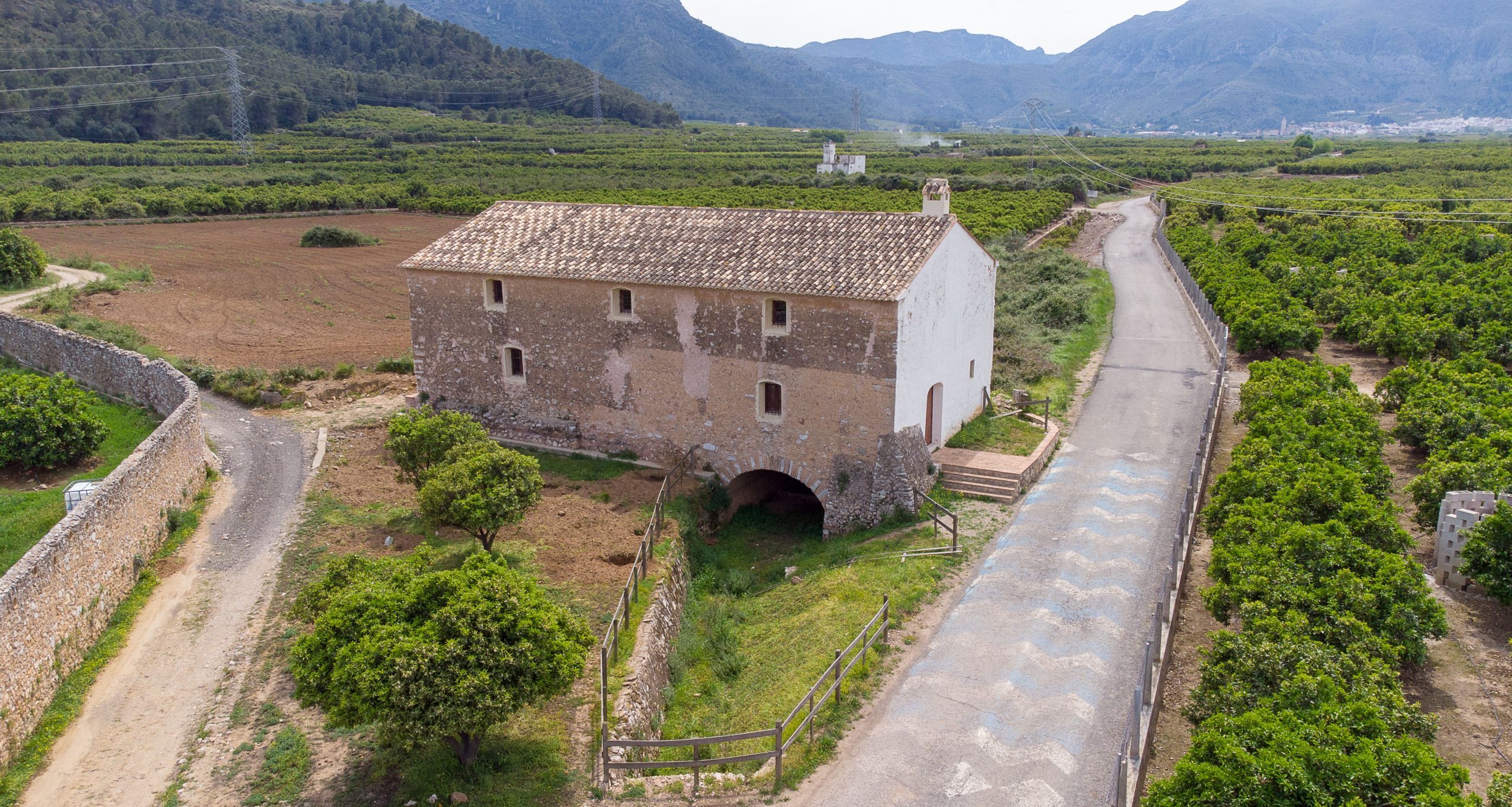
The mill in its setting
The aerial view places the building beside the agricultural landscape and the Pla path.
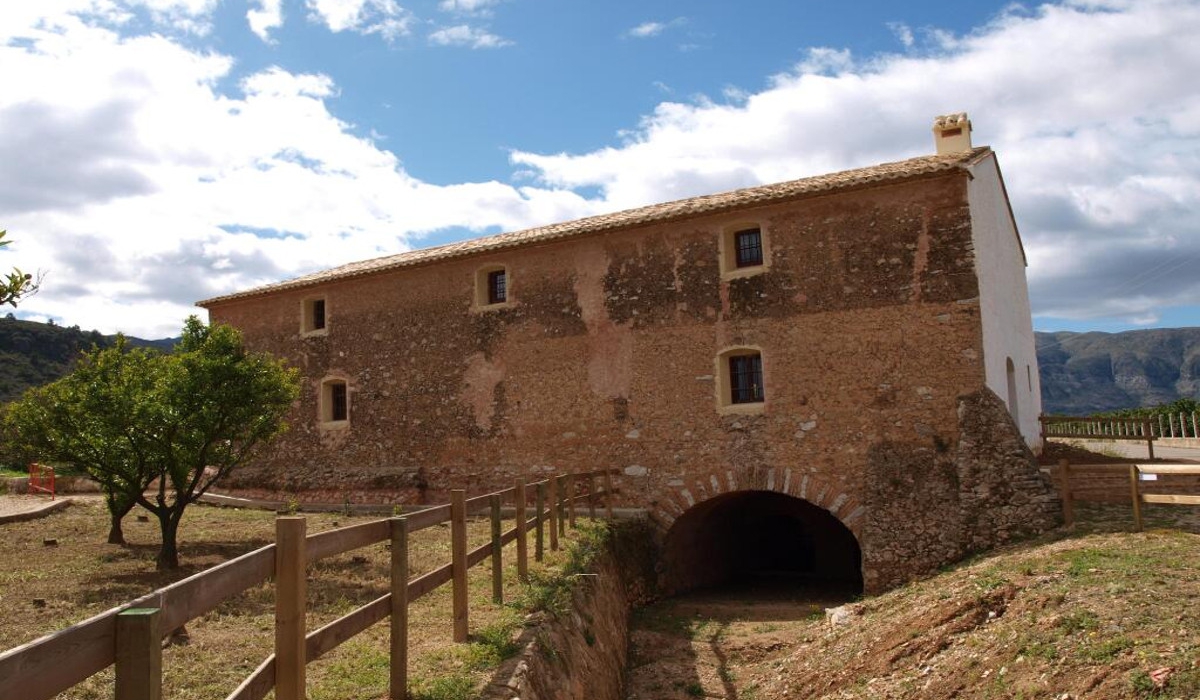
Side view
The side facade shows the simple constructive character of this hydraulic building.
Working spaces
The upper floor helps visitors imagine storage, work and daily life linked to the mill.
Recovered space
The interior can now be read as both a heritage building and a cultural space.
Constructive reading
Walls, openings and levels explain the strength needed to support hydraulic operation.
The rural landscape
The aerial view reinforces the link between the mill, the fields, water and traditional paths.
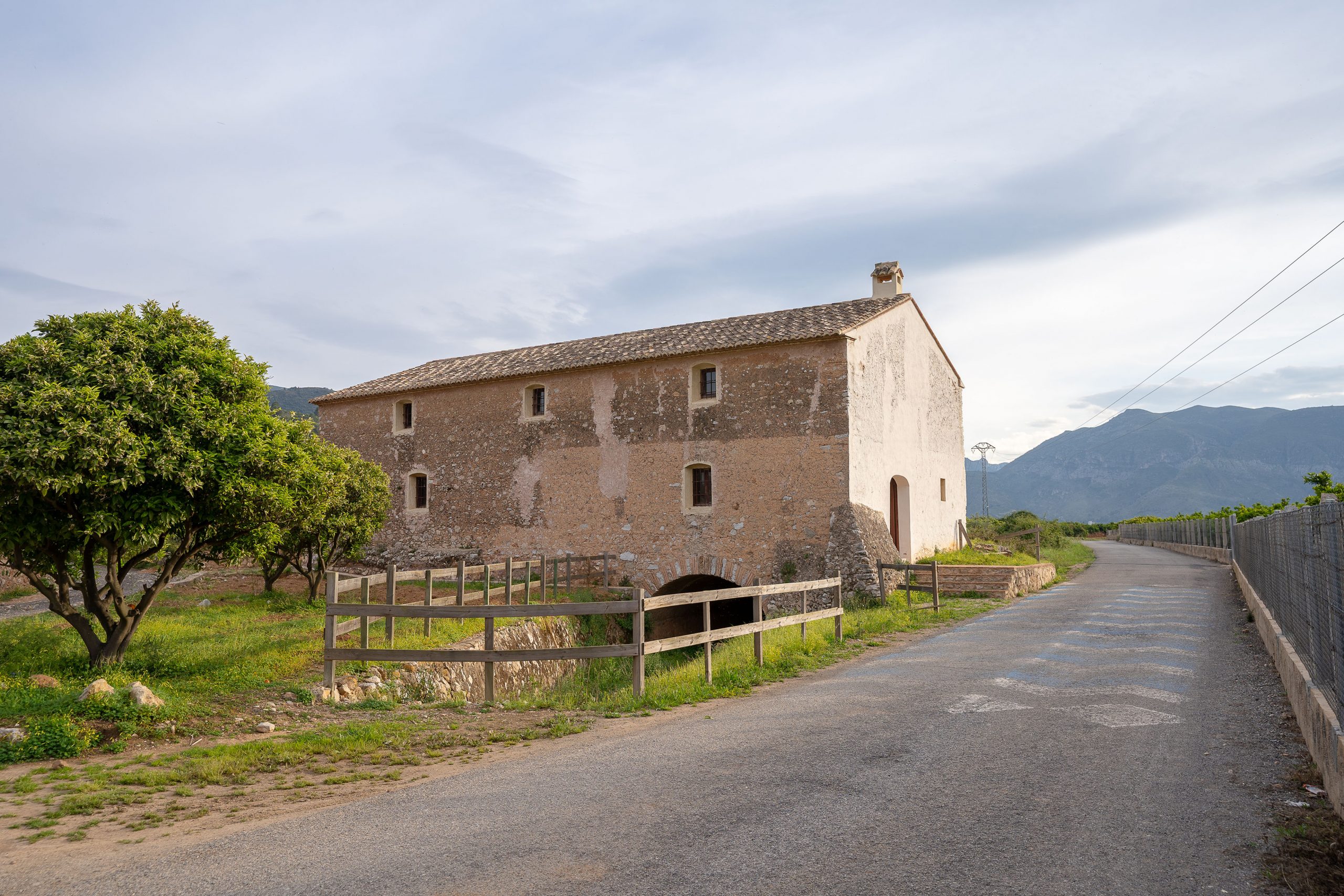
Building details
The construction details help to value the recovery of the building.
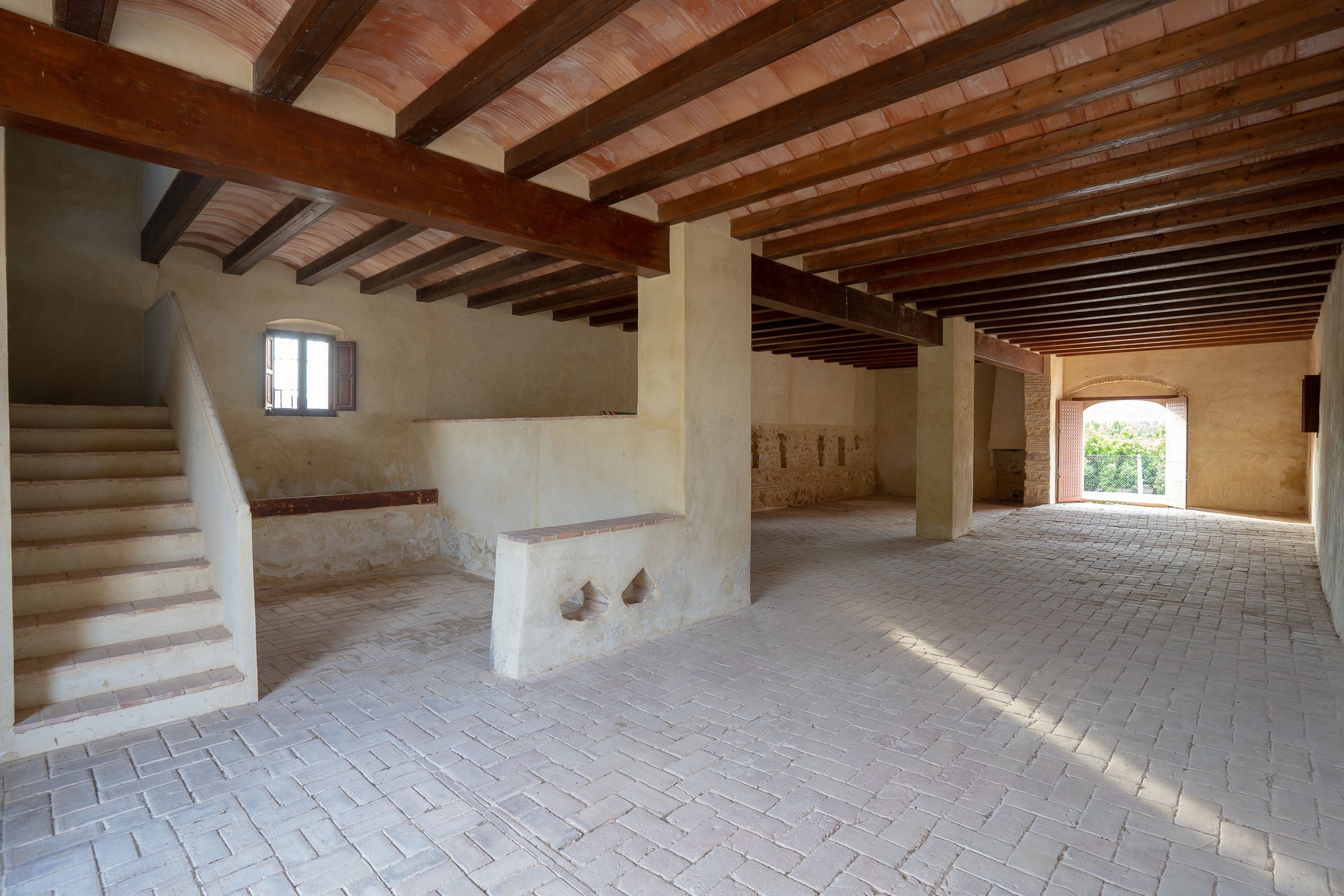
Open interior
The current interior makes it easier to imagine the old productive use and the new cultural uses.
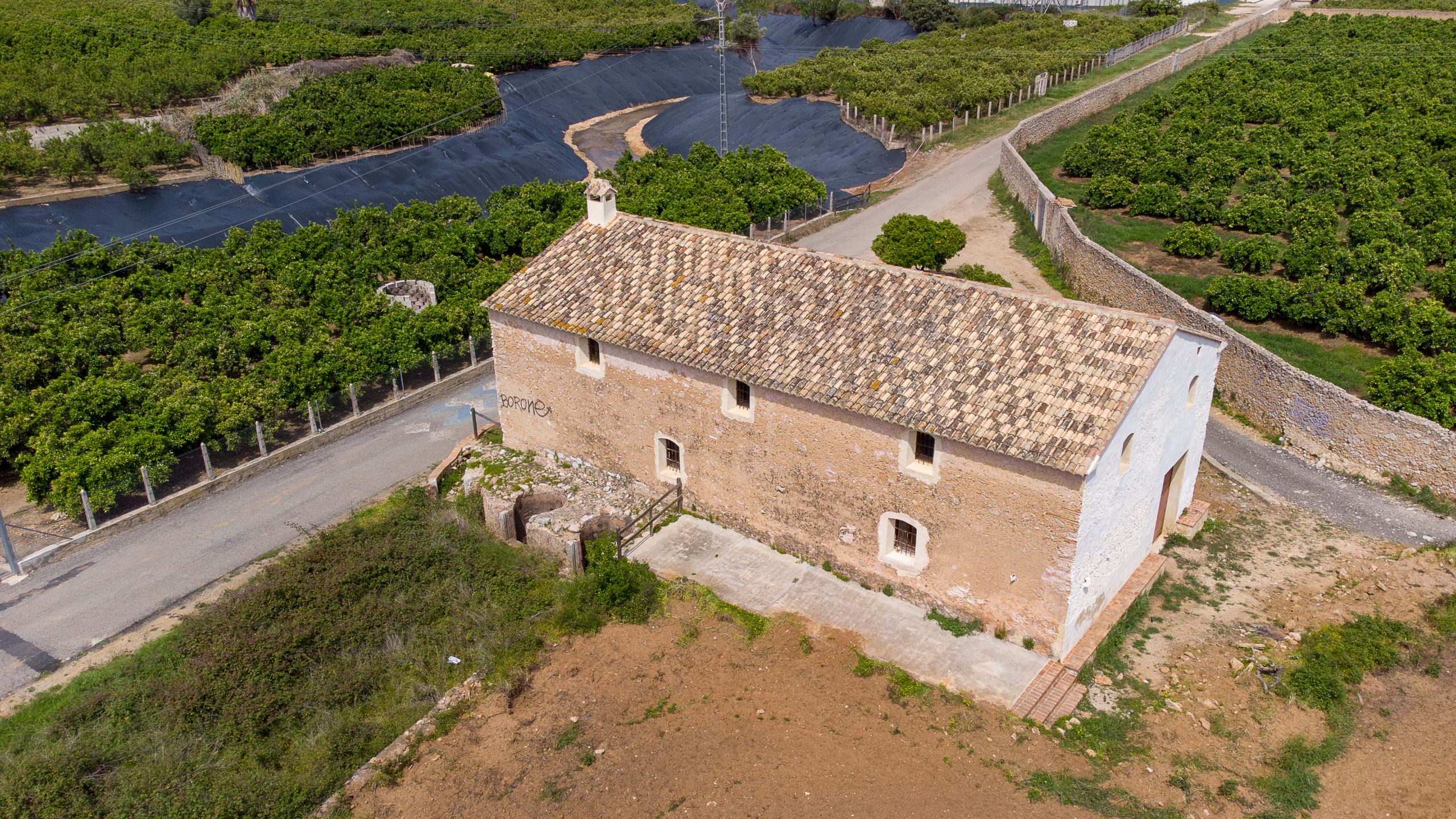
The whole site
A wider view that helps locate the mill within the territory of Tavernes.